


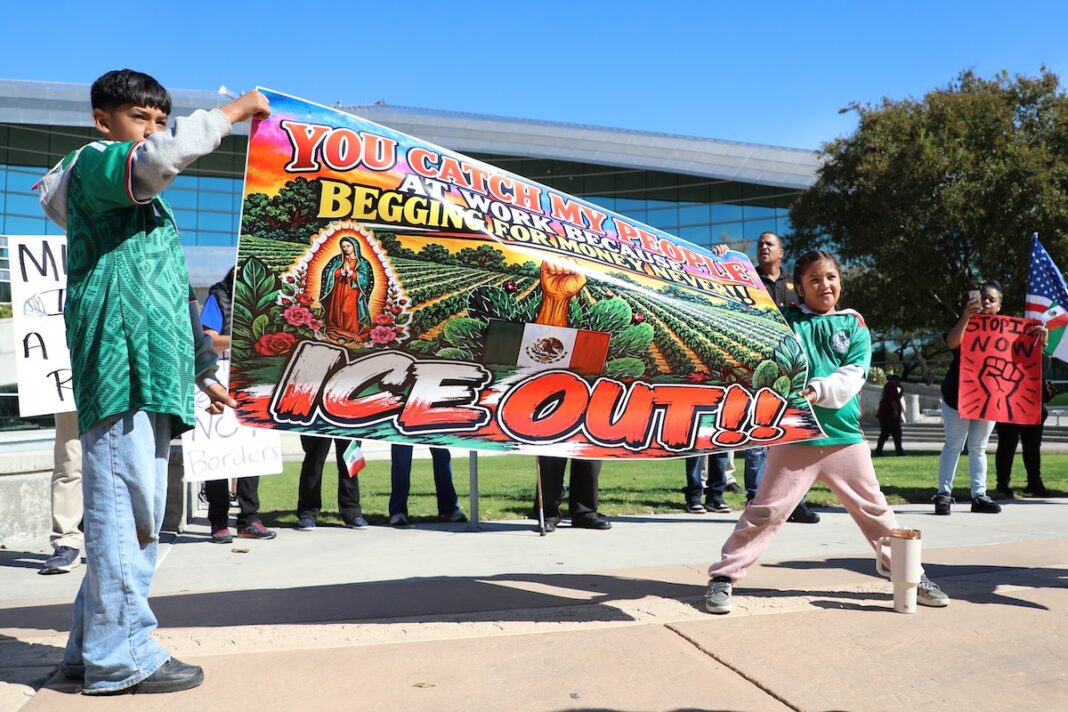

FRESNO, Calif. – Three weeks after a stepped-up federal immigration crackdown disrupted the lives of the immigrant community in the San Joaquín Valley, public money has begun flowing to organizations that provide immigrant services ranging from legal assistance to food donations.
On October 22, Fresno City Councilmember Miguel Arias witnessed his colleagues approve, on a 5-1 vote, $1 million in legal assistance for those detained by federal immigration agents.
The funds follow an earlier announcement by Assemblymember Esmeralda Soria, D-Fresno, of $3 million in state funding to eight non-profit organizations that support immigrants.
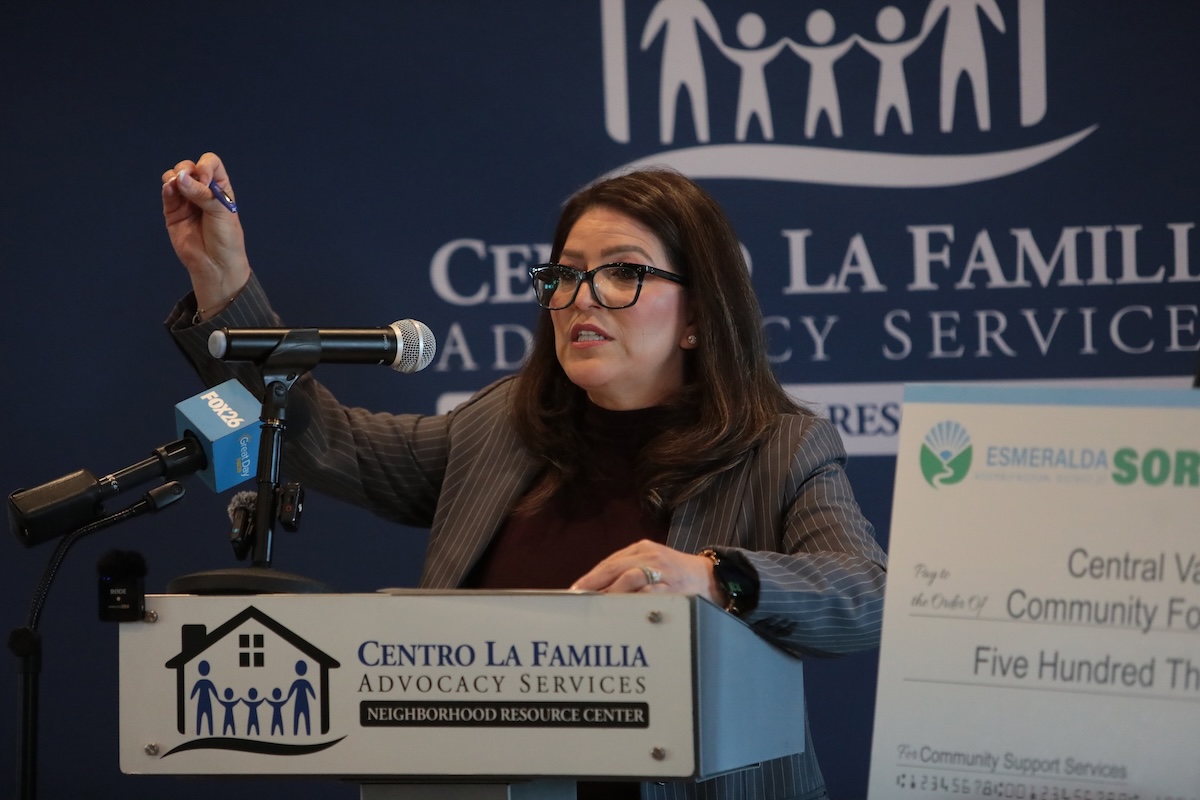
Soria and Arias both acknowledged the funds may not be enough to respond to the needs in a region where farms, dairies, restaurants, housebuilders and others depend heavily on undocumented laborers.
“This $3 million investment is not simply a line item in a state budget,” said Soria. “It is an investment in human dignity. It is an investment in family stability. It is an investment in the future of our Central Valley.”
Organizations like Centro La Familia, the Jakara Movement, Faith in the Valley and dream centers at community colleges in Coalinga and Madera will be able to beef up their services. Some of them provide legal services, others help with food or other assistance.
Linette Lomelí, executive director of the Madera Coalition for Community Justice, welcomes the $50,000 her group received because it had no budget to help when people called for help. “We quite literally are reaching into our own pockets sometimes to pay for (people’s) groceries,” said Lomelí.
The coalition has fielded calls from parents who are afraid to pick up their students from school. “A preschool contacted us and said, ‘Our babies are not going to get picked up. Family members do not want to come.’”
Community members responded quickly
In the days after the Oct. 5 start of a reported 45-day immigration enforcement in the Valley, individuals stepped up to do grocery shopping, provide free meals to those afraid to venture out and even provide free towing service for those detained.
Grocery stores, like Vallarta Supermarkets, have offered free delivery. Individuals are patrolling urban streets and rural roads to update social media followers of reported ICE sightings.
“We have seen families struggling to put food on their tables because they’re too afraid to go to the grocery store, or even to visit a local food bank,” said Soria at an Oct. 22 press conference. “I have seen our community rise to meet the fear with compassion.
“I have seen neighbors organizing volunteers, delivering food; community members sharing resources; and organizations stepping up to protest and support our vulnerable families.”
Soria said the state funds will provide additional resources for organizations to expand their efforts and reach more people.
The Jakara Movement, a Fresno-based group founded in 2000, is one of the organizations that will benefit from the state funds. The group hired its own lawyer last year to help Sikhs respond to legal challenges from the Trump administration. The attorney, said Naindeep Singh, has been busy.
“When we saw the Trump administration come in in 2025, we saw a targeting of all immigrants and, of course, our largest communities, our Latino community,” said Singh, executive director of the coalition and a Fresno city council candidate.
Having legal assistance, Singh said, is critical in the region where unscrupulous notarios (people who pass themselves off as legal immigrant consultants) take advantage of the immigrant community. The group got $100,000 to strengthen its legal help.
The Dream Centers at West Hills Coalinga and Madera Community College help undocumented students with housing, groceries or legal assistance. West Hills President Dr. Carla Tweed said the immigration crackdowns have caused some students to avoid classes.
“It is noticeable,” said Tweed, whose Dream Center received $50,000. “We are definitely seeing attendance issues.”
Tweed, who didn’t have data on enrollment drops, said the college will look at getting students to take classes online or use a hybrid system. “We want to make sure our students can get their certificates or their degrees to better our communities,” she said
City of Fresno provides $1 million
Fresno could provide legal help to undocumented immigrants without a criminal record as soon as November, said Arias. The termed-out councilmember has been an outspoken critic of the ICE crackdown and even suggested that people not attend the Fresno County fair.
A Oaxacan cultural celebration in Madera was canceled two weekends ago, and the Fresno Zoo scratched its Day of the Dead festivities and will donate to pro-immigrant organization Faith in the Valley.
“You have to be a resident of Fresno and not have any convictions as an adult to qualify for the legal aid,” said Arias. “I anticipate if this president continues to engage in the ICE enforcement that he’s done over the last several months that this fund will grow over time to meet the demand.”
The City Attorney’s Office will develop and oversee the program.
There is another concern for Arias and others: The economic impact of the immigration crackdown. Schools lose state funds when students skip school. Restaurants and other businesses report a drop in business and have curtailed hours and/or trimmed staffing. All that, said Arias, could result in a drop in sales tax revenue for the city.
“We anticipate seeing a reduction in sales tax given the fact that people are staying home now,” he said.
In the City of Madera, which Madera County Supervisor Leticia Rodríguez “lives in fear” because of ICE activity, an 8-year-old boy called on the city council to protect the community.
“Children in Madera are scared that ICE will take their parents away,” a boy who identified himself as Nathaniel told the council on Oct. 21. “It has been hard for me to focus in school because I worry I could be targeted because of my skin color.
“Kids should not be worrying about school and playing, not losing their moms, dads or friends. I want you to please stand up for our community.”
The Madera City Council opted to look into prohibiting federal immigration workers from using city property for staging and look into appointing a community immigration liaison.
This story was produced as part of “Aquí Estamos/Here We Stand,” a collaborative reporting project of American Community Media and community news outlets statewide.