



“Everybody hates. I’m sick of the hate.”
It’s a short Instagram clip. A Swedish journalist is in Springfield, Ohio reporting on a neo-Nazi rally there in late September. About 30 seconds in, the camera focuses on an older woman, white, her expression a mix of exasperation and fatigue as she walks past.
Hate is exhausting, afterall.
I’ve been thinking about that clip ever since it first crossed my feed a month or so back. The look on the woman’s face, the tone in her voice seemed at that moment to sum up what many of us have been feeling over these past 18 months.
Or, indeed, over the past decade, ever since Trump first descended his golden Manhattan escalator exhorting Americans to harness their hate.
It is no secret there exists in American politics deeply rooted strains of racism, xenophobia, homophobia, sexism. If there’s a prejudice out there, you name it, we got it.
The history of this country, in many respects, has been one of countervailing efforts to either enshrine these principles – if that’s what one can call them — or overcome them.
But not since Donald Trump has there been a figure so adept, so keenly attuned to leveraging and weaponizing the basest of our instincts for political gain.
A master showman, Trump managed to capture our attention almost from day one, no easy feat in this age of near constant noise and distraction. The Donald has lived rent free for years in our collective imaginations, inspiring fear, joy, greed, anguish, hope or despair, often in equal measure.
And yes, he inspires hate.
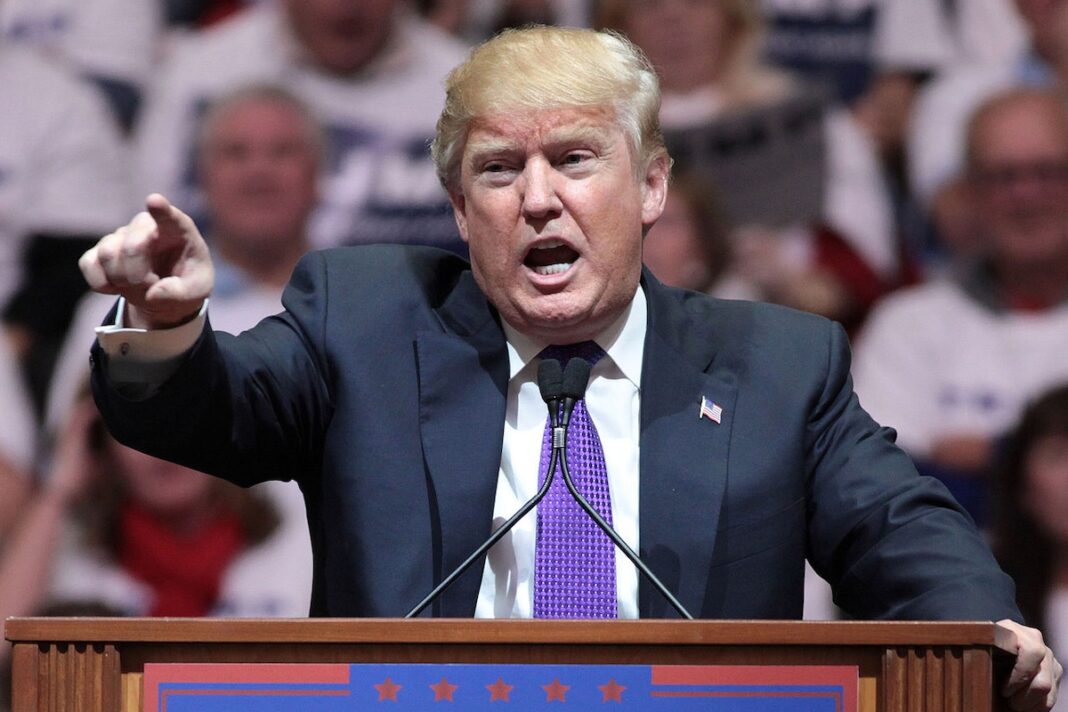
For those opposed, Trump arouses an ire both personal and political that far surpasses anything prior. It even has a name: Trump Derangement Syndrome. And the president uses that to his gain, etching a line in the sand, as it were, pitting one side against another.
For supporters, Trump is that proverbial devil on your shoulder, at turns whispering — or more likely screaming — that the hate you feel is justified. That immigrant neighbor nextdoor, the one who took your job. The trans athlete looking to sneak into the wrong bathroom. The pesky female reporter with the annoying questions. Libs, commies, the unwashed hoardes clawing at the foundations of what made America great, again.
Moreso, for Trump, that hate is a superpower, a force that binds his followers, energizes and entertains them, animates them, and ultimately translates into political success, and cultural cache. USA, USA, USA!
Tuesday’s midterm election results, thankfully, revealed the limits of that hate as a political strategy.
“JD, habibi…” smirks a smiling and victorious Dr. Abdul El-Sayed a day after handily winning his race for a U.S. Senate seat representing the state of Michigan.
Using the Arabic term for “my dear” or “my love,” EL-Sayed, whose campaign faced an endless torrent of Islamophobia, directs his remarks at the vice president, who at turns referred to the American-born El-Sayed as “evil” and “being on the side of terrorists.”
Cue the dog whistles.
“There is this delicious irony in the fact that you [JD Vance] are constitutionally obligated to swear me in in January,” El-Sayed continues, breaking into laughter.
With his win, El-Sayed becomes the nation’s first Muslim senator, just one of a slew of firsts on Tuesday night that include the country’s first Black female governor, the first Native American female governor, the first Native female senator and the first openly gay male U.S. senator.
In deeply red South Carolina, Democrat Annie Andrews defeated her opponent, Darline Graham, despite the deeply transphobic namecalling hurled at Andrews by Trump and his allies. In Texas, Republicans took turns swiping at James Talarico’s masculinity, to no avail.
Yes, it’s the economy.
Americans, many of them at least, are struggling. Corporations may be making a “freaking ton of money,” to quote Trump during one of his recent rallies. But for the average person, life is an increasing grind. Throw in rising gas prices, rising health care premiums, rising rents, billionaire tax cuts, and uncertainty over AI, and it’s no wonder voters opted for candidates who spoke most directly to those concerns.
It’s the same dynamic that got Trump elected first in 2016 and then again in 2024. In both instances, he gave voice to those who felt left behind, ignored, cheated by an out of touch political class.
And, in doing so, he gave us a target, pointing the finger at the marginalized, the vulnerable, the weak. They are dragging us down, he intoned.
Fool me once, shame on me. Fool me twice… On Tuesday, that hate fell short, by a lot.
Where Republicans go from here is anyone’s guess. In 2012, after Obama’s election win, the GOP embarked on what was then called an “autopsy” as it sought to address its long-standing disconnect with a demographically changed electorate. Then Trump came along.
Perhaps its time Republicans dust off that report and put the hate behind them, for the sake of their party, the country, and that woman in Springfield. She, and we all, could use a break.