


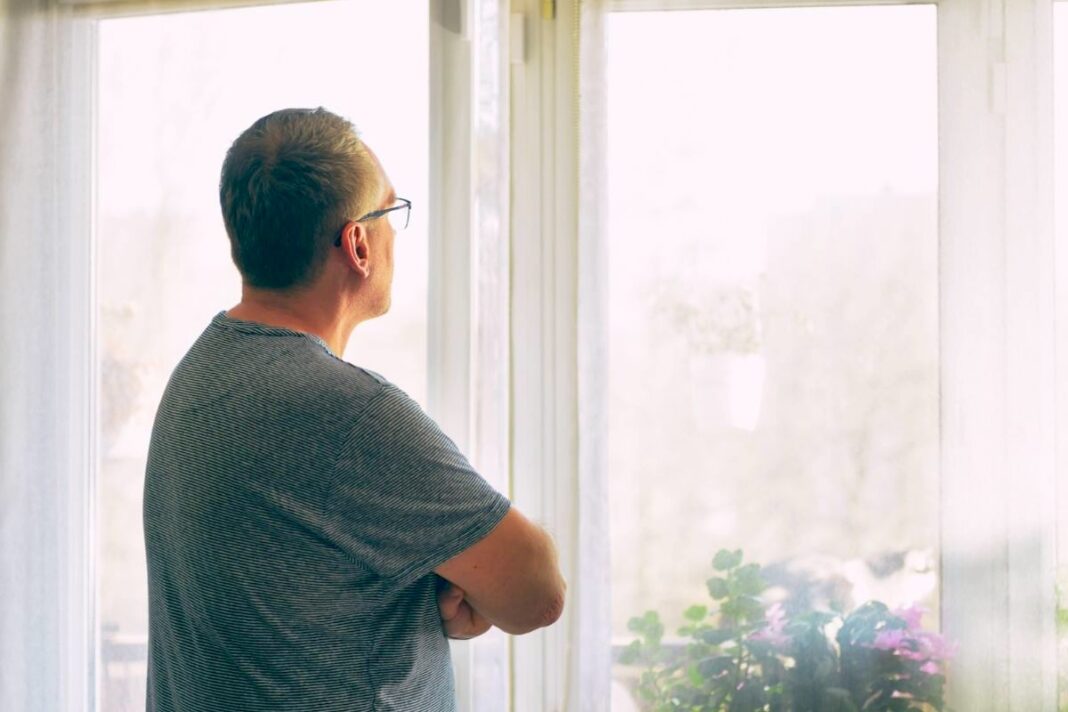

Roughly one in eight Californians feel lonely usually or always, and three in five did not take part in a single club, organization or community group in the past year. The state is now tackling this isolation as a public health emergency.
The California Love, California Strong campaign, launched earlier this year by First Partner Jennifer Siebel Newsom and GO-Serve, aims to rebuild social connection across generations statewide, as economic insecurity, dwindling social networks and fear of immigration enforcement deepen isolation beyond what individuals can do on their own.
Social disconnection is associated with a 29% increased risk of heart disease and a 32% increased risk of stroke. Former U.S. Surgeon General Dr. Vivek Murthy has compared its premature death impact to smoking up to 15 cigarettes a day.
Globally, the World Health Organization has linked loneliness to an estimated 100 deaths an hour — more than 871,000 deaths annually.
California’s campaign to address this public health crisis includes the state’s first Social Health Council, which, with UC Berkeley, will recommend to the next administration how to measure and strengthen connection; $30 million in state public health grants to community and tribal organizations; and a statewide promotion of libraries, parks and senior centers as places where people build relationships.
Addressing loneliness and isolation
Sohil Sud, MD, MA, Associate Clinical Professor of Pediatrics in the Division of Pediatric Hospital Medicine at the University of California, San Francisco, explains the difference between loneliness and isolation and notes that it’s important to understand the distinction so that we can address each problem effectively.
“As a physician, I can tell you social connections are not just nice to have; they actually matter deeply to our health,” said Dr. Sohil Sud — associate clinical pediatrics professor at the University of California, San Francisco and the director of California’s Children & Youth Behavioral Health Initiative — at a Nov. 10 American Community Media briefing.
A recent nationwide survey, “Social Connection in America,” shows that 39% of American adults reported having two or fewer close relationships, while 40% reported moderate to severe loneliness.
Loneliness and isolation are not the same, Sud said: “Isolation is objective. It’s that state of having measurably few relationships, minimal social interaction, maybe living alone, not getting out … Loneliness is subjective. It’s that distressing feeling, whether you’re isolated or even if you are getting out, that you’re not getting what you need. You can be lonely in a relationship. You can be lonely at a party.”
“We have to understand these differences because the policy solutions are very different,” he continued. “Tackling isolation is about bringing people together. Tackling loneliness is about finding ways to make those interactions really high-quality and meaningful and purpose-driven.”
He described the state’s solutions as “social infrastructure” — the policies and spaces, like libraries, parks and senior centers, “that enable people to participate in social and civic life.”
According to the Social Connection in America survey respondents, the greatest barriers to social connection at such places are time (30.6%) and distance (14.8%), followed by the effort it takes to get together (13.3%) and anxiety in social situations (11.1%).
For the youth that Sud treats, the consequences of this isolation can be physical.
“A child … comes to the emergency room usually for a physical symptom, belly pain,” he explained. “I have countless examples in which we have worked that symptom up with scans, blood tests, ultrasounds, examinations, a whole lot of physical procedures, all to reveal really no underlying true abdominal pathology, and that it’s a symptom of what’s happening somewhere else.”
“You unpack that deeper and deeper and deeper, and you realize in some cases, maybe it’s bullying or it’s a situation at home that’s not going so well, and then from there, it’s about understanding what brings that child joy and meaning,” Sud said. “We really want to approach this from how we can find joy and meaning in our lives by bringing people together.”
Safety net as social health
Mayra Alvarez, president of The Children’s Partnership (TCP), shares data on teen loneliness and what teens say they need to feel connected.
A statewide survey released this summer by the California Partners Project finds that nearly nine in 10 teens say being with friends in person matters to them, and more than half wish they saw friends in person more often.
“Young people are telling us that they’re not giving up on connection; they’re actually asking for it,” said Mayra Alvarez, president of The Children’s Partnership.
Ongoing federal immigration enforcement can often deepen that disconnection: “When immigrant families are afraid to go to the park, when they’re afraid to take their kid to the library, when they are afraid to go to the clinic or even to go to school, children lose the very places where connection happens. Fear is isolating.”
This isolation is also compounded by federal Medicaid cuts, which begin taking effect with new recertification and work requirements Jan. 1.
The state Department of Health Care Services projects 1.1 million Californians will lose coverage from the work requirement alone by 2030, and the California Budget & Policy Center estimates up to 3.4 million enrollees could lose Medi-Cal overall.
“Connection campaigns, they’re not going to make up for lost health coverage, food assistance, or safety. Keeping the safety net strong is social health policy,” said Alvarez. “When families face cuts to the safety net … they’re losing the trusted people and places that keep them connected.”
Shrinking worlds for older adults, caregivers
At a media briefing on California Love, California Strong, the state’s initiative to tackle loneliness and isolation, Dr. Donna Benton, director of the USC Family Caregiver Support Center (FCSC) and the Los Angeles Caregiver Resource Center (LACRC), discussed the link between ageism and the social exclusion of older adults.
For older adults, health and isolation are even more closely interdependent, while the caregivers they need are often isolated themselves.
By 2030, 10.3 million Californians 60 and older will make up 25% of the state’s population.
“The loneliness and isolation actually exacerbates any kind of health condition that we have … like depression, heart disease, stroke and even dementia,” said Dr. Donna Benton, director of the USC Family Caregiver Support Center and the Los Angeles Caregiver Resource Center.
Meanwhile, of California’s 6.4 million caregivers, roughly 70% work a job in addition to their caregiving, and one in four report feeling alone.
“Family caregivers often report that being a caregiver expands their patience … but it also tends to shrink their world,” said Benton. “They find fewer spontaneous visits from friends and family members, and they aren’t able to go out without significant planning to things that you might take for granted, like going grocery shopping, going to the pharmacy, going to see some more friends, maybe going to a movie or even going out to a park.”
Benton pointed to her own experience of those barriers.
Using a walker after a leg injury, she called ahead to a business where she planned to meet friends to ask whether they had ramps that would let her get inside.
“They didn’t really know how many stairs they had to get up to their business, if they had a ramp, if there were all booths versus chairs,” said Benton. “I really didn’t want to reduce” said Benton. “I didn’t want to reduce my social connectedness during this time of limited mobility.”
“Connection is something communities can make easier,” she added, “and not just something individuals should have to somehow find on their own.”