


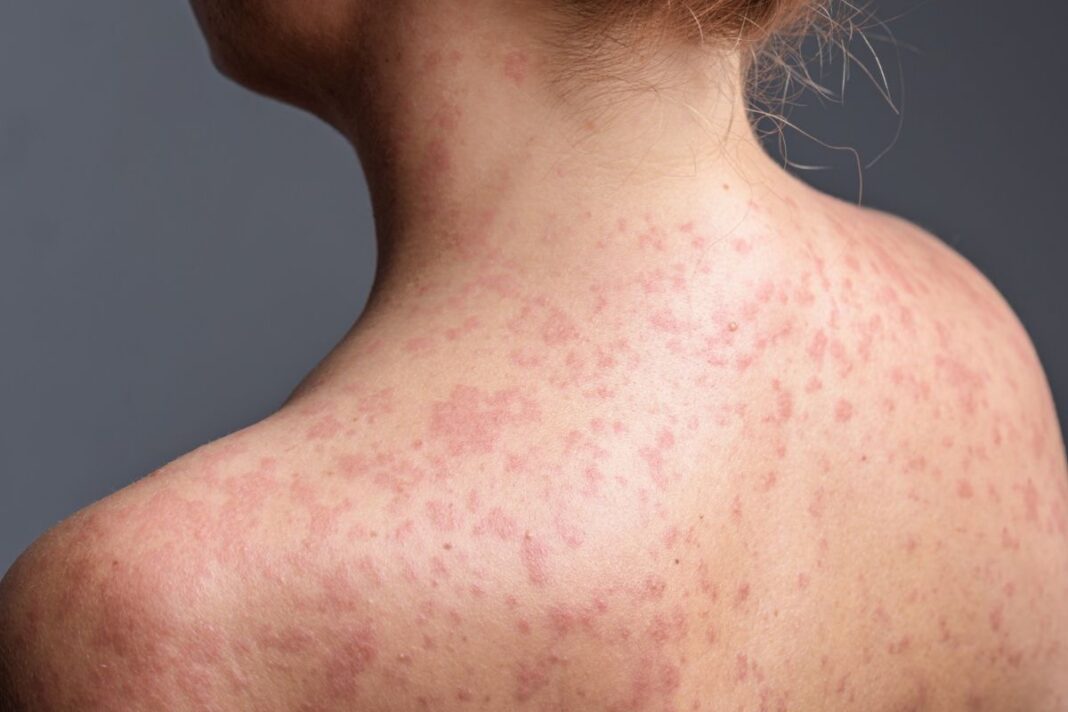

The US lost its measles elimination status Nov. 17 after failing to stop the continuous spread of the virus for at least one year.
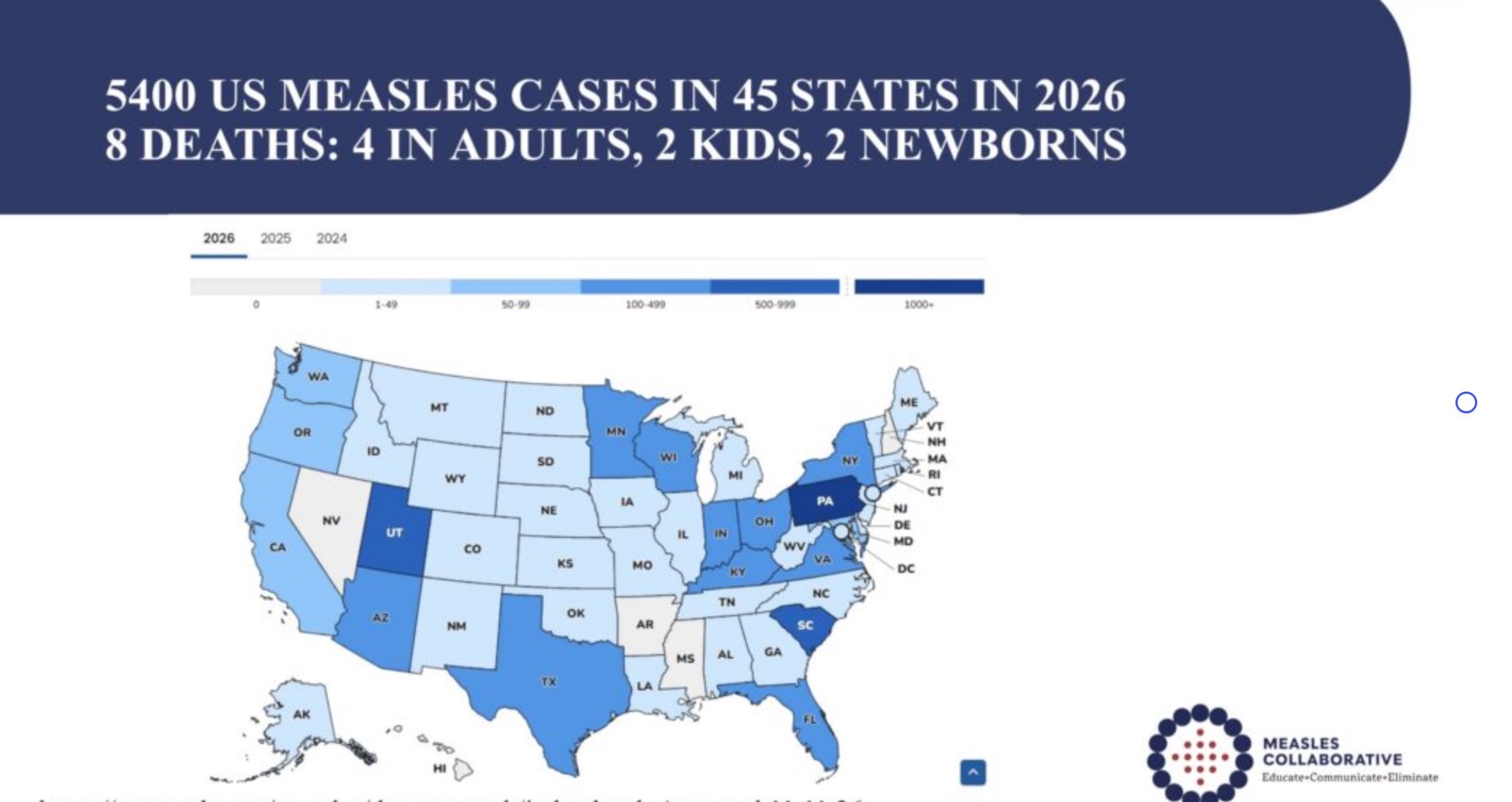
The decision came down as 45 states reported cases of measles, for a total of 5,412 confirmed cases in 2026, according to Nov. 12 data from the Centers for Disease Control and Prevention.
Older adults, including immigrants who may not have received a vaccination in childhood, are especially vulnerable to measles infections and harsher outcomes. Many countries in Asia, Africa, and Latin America did not formalize their measles vaccination programs until the mid 1970s and into the 1980s. India, for example, did not begin its wide-scale measles vaccination program until 1985.
Measles vaccinations became mandatory for people immigrating to the US under Section 341 of the Illegal Immigration Reform and Immigrant Responsibility Act of 1996, meaning many immigrants who arrived prior to that date may lack a vaccination against measles, along with mumps and rubella, which are now given as a single shot.
Patsy Stinchfield, Pediatric Nurse Practitioner and Executive Director of the Measles Collaborative, explains the importance of measles elimination status.
Hospitalization higher in adults
About 41% of reported measles infections are currently in adults ages 20 and older. Hospitalization rates for infected adults are about 15%, according to data from the Measles Collaborative.
But health experts at a Nov. 13 American Community Media news briefing cautioned against blaming immigrants for the surge in measles cases, noting that the dramatic rise stems from parents in the US who are hesitant to vaccinate their children against a variety of illnesses.
The Pan American Health Organization deliberated Nov. 10-13 before making its Nov. 17 announcement that the US had lost its measles elimination status. The US gained its status in 2000, when fewer than 83 cases of measles were reported. CDC data show infection numbers in 2026 are nearly double the number of cases reported in 2025. Eight deaths from measles have been reported this year, including 4 adults, 2 children, and 2 infants.
Measles hotspots
Pennsylvania remains the epicenter of the 2026 measles outbreak, with 1,542 cases reported in 46 counties, according to Nov. 13 data from the Pennsylvania Department of Health. Other hotspots include South Carolina, Utah, Wisconsin, and Minnesota. Forty five U.S. states have reported infections.
Case numbers are lower in states like California, where more than 95.7 % of the population is vaccinated against measles.
“Losing measles elimination status is much more than losing a public health designation. It means the virus has circulated for a prolonged period, putting families and communities at risk of preventable illness, hospitalization and death,” said PAHO Executive Director Dr. Jarbas Barbosa, in a Nov. 17 press statement.
Canada lost its measles elimination status last year. Bolivia and Mexico have also lost their elimination status.
“This is a serious warning for our region, but it is not an irreversible setback,” said Barbosa. “We know how to prevent measles, and we know how to stop its transmission. With sustained commitment to vaccination, strong surveillance and effective outbreak response, the Americas can eliminate measles transmission once again.”
Undercount of infections and deaths
The number of cases reported to the CDC may represent a vast undercount, said Patsy Stinchfield, executive director of the Measles Collaborative, at the ACoM news briefing. The actual number of cases may be 4 to 10 times higher, she said.
“For every individual that we know about, there are pockets of infection: people who were just not sick enough to get healthcare, or they didn’t want to go in and get tested. Infection rates may also be greater than reported numbers, in communities that don’t choose to interact with modern medical care,” said Stinchfield.
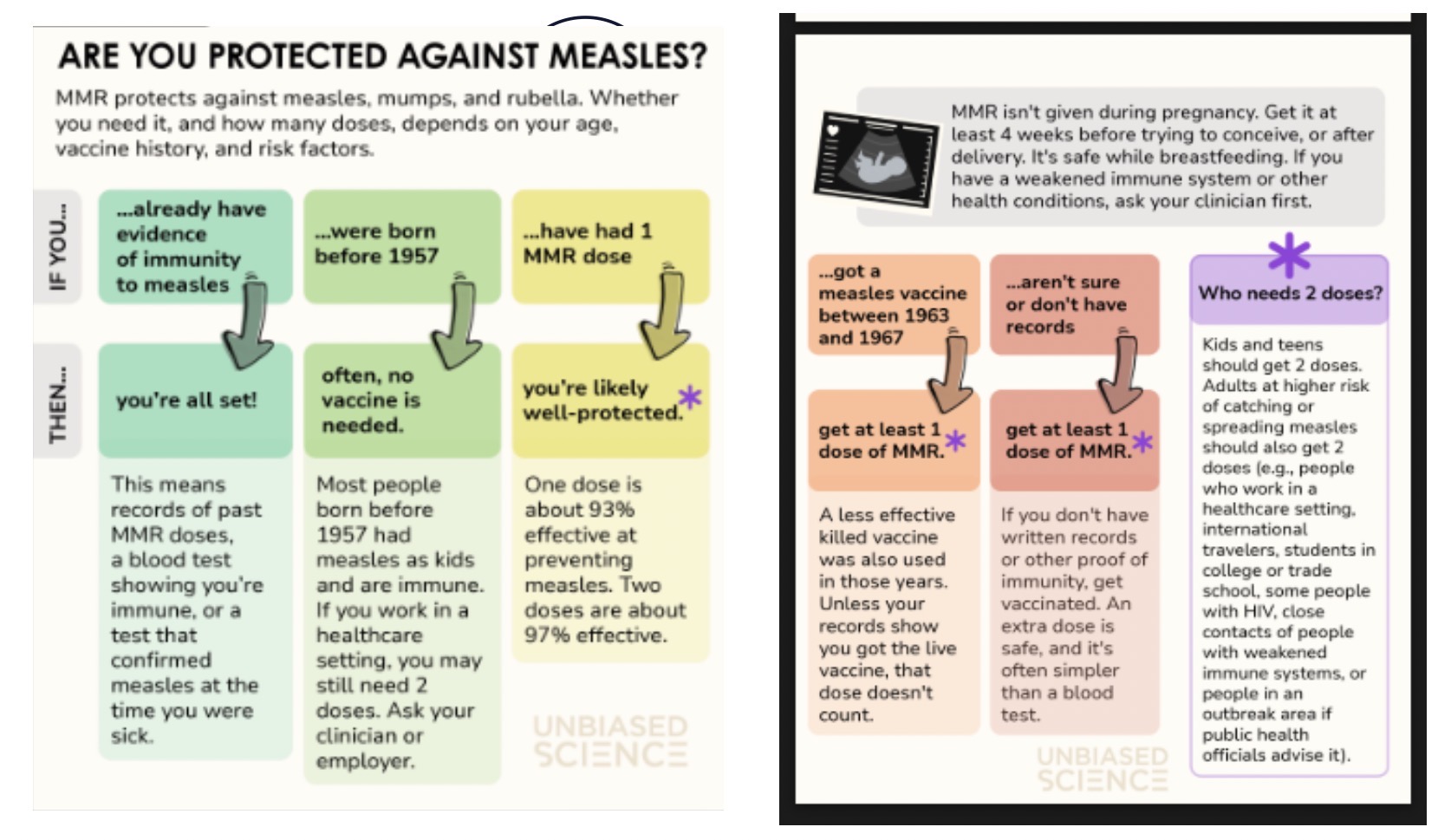
Dr. Andi Shane, chief of the Pediatric Infectious Disease Division at Emory University School of Medicine, noted the number of deaths attributed to measles may also be an undercount, especially in adults, where underlying illnesses such as pneumonia may be recorded as the official cause of death.
Adults are more vulnerable to catching a measles infection, said Shane. Before 1963, most children under the age of 5 acquired measles and developed natural immunity, she explained.
Community protection is lost
As vaccines were introduced, communities developed protection against the airborne disease, said Shane. “So that is the ideal state. However, what’s happened with a lack of vaccination is that we have circulation of the measles virus again and loss of community protection.”
”And so because of the loss of immunity of children, measles is now being spread to adults who do not have protection and were previously relying on the protection of children,” she explained.
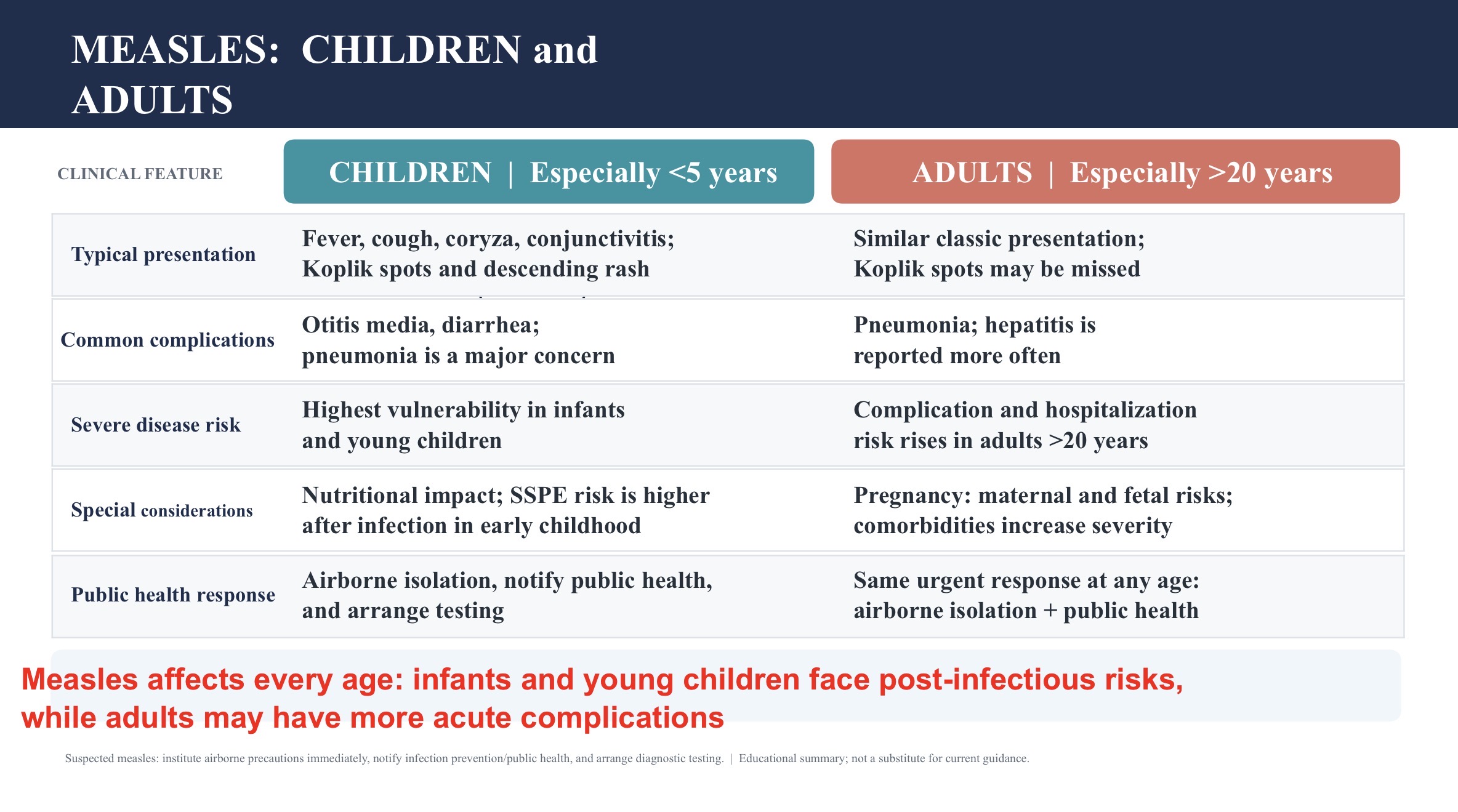
Most people who were born before 1957 are assumed to be measles immune, because they had measles as a young child and had recovered, explained Shane.
People who got immunized between 1963 and 1967, she continued, got a “killed vaccine” — a type of vaccine made from an inactive measles virus — that was ineffective. Shane added they, too, would not be protected against infections.
Many immigrants, meanwhile, may also have fragmented or missing records, which render their immunization status unknown. Structural and language barriers also hamper the ability of immigrants to access the care they may need, thus putting them at greater risk for measles infections, said Shane.
Catch-up vaccines
Dr. Margot Savoy, MD, MPH, Chief Medical Officer at the American Academy of Family Physicians, offers advice on how to get the measles vaccine for people who may not have health insurance.
Dr. Margot Savoy, chief medical officer at the American Academy of Family Physicians, noted that adults who have not been immunized as children can get catch-up vaccinations as adults.
“If you don’t have any immunization record or a doctor’s record that shows where you got vaccinated, then we would recommend that you get one dose of the combined measles, mumps, rubella vaccine,” she said, noting 1 dose offers 93% protection over a lifetime.
Some groups of people may need more than one dose, such as folks who work in healthcare spaces, college students living in dormitories, military recruits, and others living in tight density households, said Savoy. Two doses are also recommended for people living with someone who has a weakened immune system.
“Protect yourself from getting sick so that you don’t get them sick, because they may not be able to get a vaccine,” she said. Two doses provide 97% protection over a lifetime.
No link to autism
Much of the debate around the measles vaccine has focused on possible links to autism. Savoy refuted such notions.
“It is a safe vaccine. We have been giving it to people for over 50 years,” she said. “They have studied it multiple times, and they’ve never been able to make an association between the incidence of autism and the presence of the vaccine, and so that’s not a concern.”
”It is a very good vaccine, does a very good job, even on the first dose,” said Savoy.
Those who are unsure of their vaccination status can take an immunoglobulin test — IgG — or a titer test. But Savoy recommended simply getting a vaccination instead of taking the costly test, noting it would not be harmful, even if the individual is already immunized.
‘Dangerous misremembering’
“Thinking that you had the shot, or thinking that maybe you might have had measles as a child because you thought you had a rash doesn’t count. Oftentimes we have challenges with people having misremembered, and in this case it’s a pretty dangerous misremembering. So, if you thought you remembered and you remembered incorrectly, you’re putting yourself at risk,” said Savoy.
For people who have had chemotherapy, they are likely to have wiped out their immune system, and may need to get revaccinated for a number of illnesses, she noted.
Losing a sister to measles
Minnesota-based nurse practitioner Munira Maalimisaq shared the story of her sister Zakia, who died from measles as a child in Somalia. “That loss has shaped my understanding of the devastating consequences of vaccine-preventable diseases, such as measles,” she said.
In 2006, 92% of Somali Americans living in Minnesota had received the MMR vaccine. In 2026, that number dropped to just 24% of children 2 and under, noted Maalimisaq. Catch-up efforts have raised that number to 86% of school-aged children.
Minnesota has experienced 5 measles outbreaks since 2011, which has cost the state about $7.7 million in response efforts, said Maalimisaq.
“This is not simply a question about vaccine availability. We have to understand what has happened to trust, relationships, and access,” she said, noting the Somali American community she serves has been targeted with misinformation.
Communities in rural Somalia, where Maalimisaq’s sister died of measles, may still not have access to the MMR vaccine, said the nurse practitioner, noting that barriers to accessing health care still persist.
“I’m pretty sure my mom would do anything to vaccinate my sister if we could have,” said Maalimisaq.