


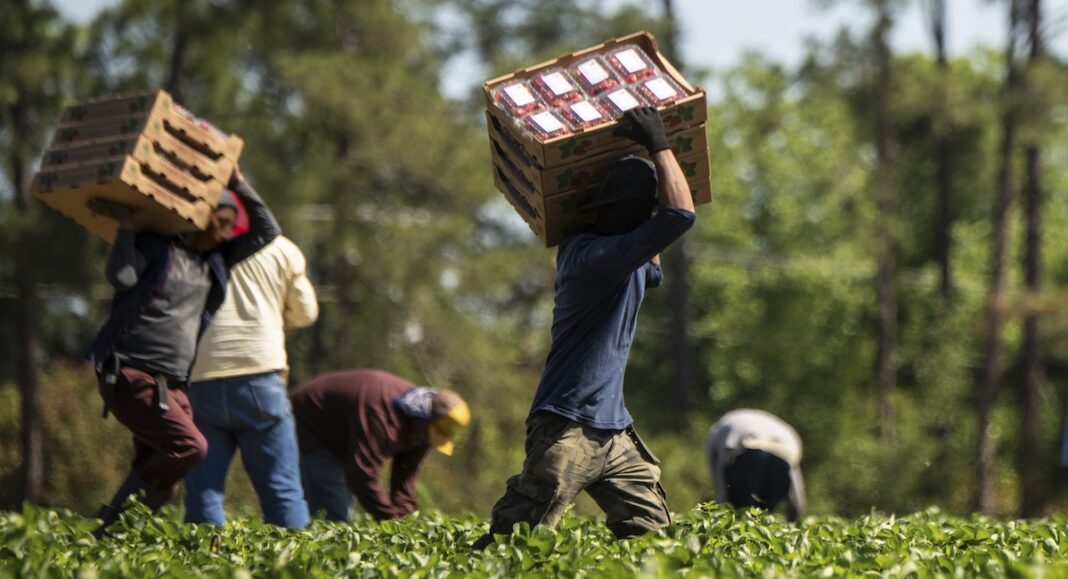
Teresa was anxious as she waited for Valley Voices, the non-profit behind a monthly food distribution network that reaches hundreds of farmworker families in the Central Valley, providing groceries and other staples to those who don’t have enough to eat.
Over the last two months, Teresa (who asked that we only use her first name) says she has worked only four weeks, not enough to cover the cost of rent, let alone feed her family.
Teresa, 62, has spent 30 years working as an agricultural laborer in California’s fields. A single mother and survivor of domestic violence, she was among some 250 families waiting November 21 to receive a turkey for her Thanksgiving dinner.
“We are afraid of the ICE raids, and we are afraid of not having a job,” she said. “I’ve been working in the fields for 30 years, but since last year, it has been really hard to find a steady job.”
She speculates that local foremen are bringing in their own crews to clean the produce instead of hiring additional workers, and that automation and technology may also be contributing to the decline in job opportunities.
“It’s ironic that we, who produce food for Americans, often struggle to have enough to eat,” said Teresa. “It’s hard—very hard—not to have a job when you have a family to feed.”
Data show that farmworker jobs in the San Joaquin Valley—also known as America’s breadbasket for the region’s immense agricultural output—have been on the decline over the past decade, falling by as much as 17.5%, “the lowest level in over a decade,” according to one local news outlet, with continued declines projected in the years to come.

For area farmworkers the decline in available work adds to the growing sense of unease, as prices for daily staples continue to climb and as the Trump Administration doubles down on its immigration enforcement policies.
“A lot of people have been affected,” noted Valley Voices Executive Director Ruth López. “There are already some that have left the country because they don’t want to see their family divided,” she said, referring to those who “self-deport” for fear of being detained by federal agents.
The combined effect of the raids and general decrease in work has led to increased hunger, especially in farmworker households where average incomes often fall below the poverty line. Numerous studies have also shown many farmworker households confront food insecurity. Ongoing immigration raids have also led many to fear venturing out of their homes, making food deliveries all the more critical.
Valley Voices was among the more than 100 community-based organizations (CBOs) to attend a recent California Connects event in Fresno held Nov. 18. Organized by Governor Newsom’s Office of Community Partnership and Strategic Communication, the meeting brought together local agencies and nonprofits with the goal of better assisting communities struggling from federal funding cuts and immigration raids.
“The saddest thing is that the Central Valley is where the food is grown, but the people who work the land don’t have access to the food,” said Ricardo Castorena, CEO of Binational Central California, which works to support low-income families in the Central Valley. “What’s needed now is for more organizations to come together to meet the great need for food, especially for farmworkers.”
Cuts to federal funding for programs including SNAP and Medi-Cal have left families reeling, said Castorena, who stressed the need for organizations to find ways to work together more effectively in response.
Castorena added the cuts have forced his own organization to end certain vital programs, though he added food distribution would be the last one they touch. Binational California hosted 142 events last year serving some 160,000 hot meals to local families.
“At our events, you might not have a band or a mariachi group,” he said. “But what you won’t miss is a hot meal and other professionals that can answer your questions free of charge.”
Claudia Corchado is deputy executive director with Cultiva Central Valley, which focuses on expanding health equity. She said her team has of late focused increasingly on farmworkers, helping them access health and mental health services through Medi-Cal (California’s version of Medicaid).
Part of securing farmworker health also entails ensuring they know their rights, explained Corchado. “Farm workers are afraid to ask for the rights they deserve,” she said. “And that affects the whole family.”
The Fresno gathering was the last in a series of eight similar regional convenings across the state “designed to spark new connections, strengthen resilience, and equip organizations with the tools and resources they need to make lasting impact in their communities,” according to the OCPSC website.
Fresno Mayor Jerry Dyer addressed the crowd during the event, reminding attendees of the important role immigrants play in the region, noting that his primary responsibility remains the safety of its people.
“I don’t want people to live in fear, to be afraid to go to school, to the supermarket, or to the doctor,” the mayor said. “We want our community to enjoy a certain quality of life, which is why we don’t work with federal agencies on raids.”
Dyer emphasized that he wanted the people of Fresno to feel safe and welcomed. He reminded the community that the Community Affairs program at City Hall is available to assist them with any needs.
Assemblyman Joaquín Arámbula was also on hand, noting that as the grandson of immigrants he understands what the community is going through at this moment.
“My grandfather emigrated, like many migrant workers,” the assemblyman said. “Here we found opportunities to get ahead, which is why I feel a great responsibility to help the entire migrant community in any way they need.”