


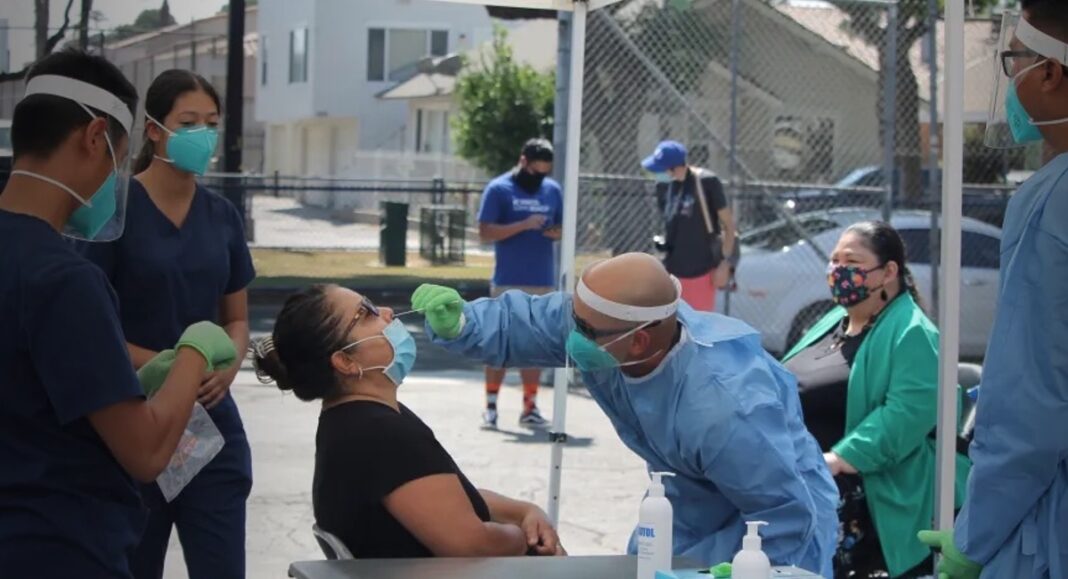
Jorge Luis Macías | La Opinión
(Headline: Seven lessons from the Covid-19 pandemic)
The scientific community acknowledges that California, a state of 40 million people, did a generally good job for three years in handling the Covid-19 pandemic after the first massive outbreak at a nursing home in Washington state in late February 2020.
“California soon after closed schools, jobs, churches, parks, and tried to keep most people at home,” says Edward Jones-Lopez, Ph.D., an infectious disease specialist at Keck Medicine of the University of Southern California (USC). “Healthy distance, use of masks, and recommendations were implemented to interrupt transmission of the virus.”
Since the pandemic was declared in March 2020, the California Department of Public Health began archiving the most recent data for cases and deaths, positivity rates, hospitalizations, vaccination rates, boosters, testing, treatment and other mitigation measures such as the use of face masks and indoor ventilation.
With the end of the state of emergency on May 11, the state will phase out the last regulations and executive orders that were issued three years ago. The global health crisis, however, left valuable lessons for the Latino community.
The full story is available (in Spanish) at La Opinión.