


SAN FRANCISCO – Anxiety has been the defining hallmark of life for Samir since he lost Temporary Protected Status (TPS) in 2025. The 32-year-old Venezuelan now finds himself adrift in a legal limbo, stripped of his livelihood and with no clear path ahead.
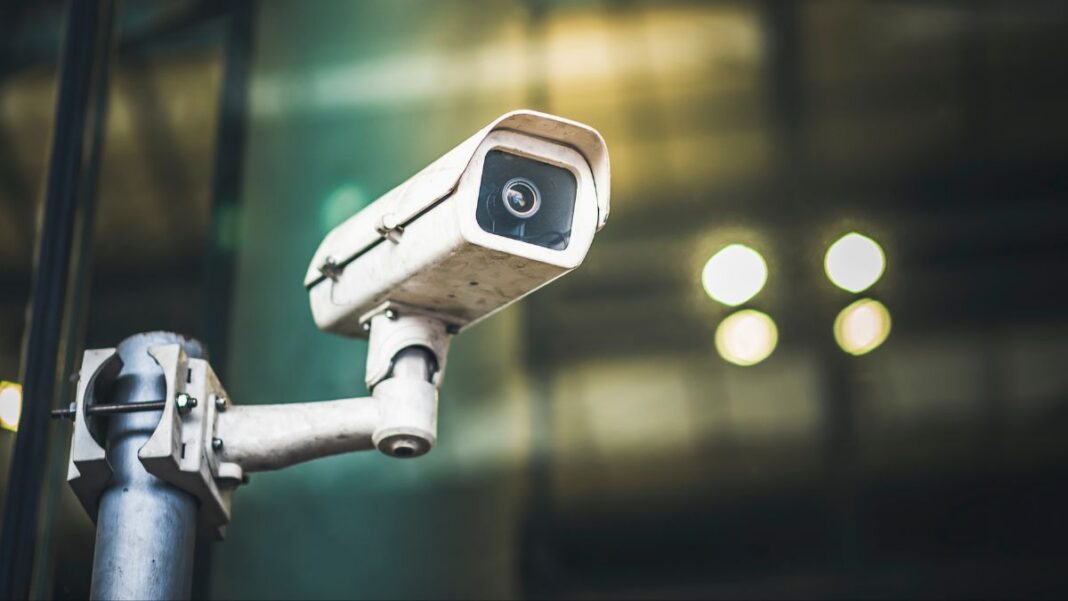
Adding to his fears, he says, is the explosion of surveillance cameras across San Francisco and nationwide, fueling a pervasive sense of his own vulnerability.
“From the moment I step outside the door, I look forward, I look back, I look in every direction constantly,” said Samir (who asked that we not use his real name). “Anything looks suspicious to me. It’s paranoia. You end up feeling like a criminal without having done anything wrong.”
That sentiment is part of what is behind the growing public backlash against the government’s expanding surveillance capacity, one now being deployed as part of the Trump Administration’s ongoing anti-immigrant crackdown.
‘Like Amazon, but with human beings’
There are, according to estimates, between 70 and 80 million surveillance cameras installed across the country, or roughly 1 camera for every 4 to 4.5 residents. Among these are some 120,000 Flock Automatic License Plate Readers (ALPRs) deployed across roads and highways nationwide.
The rapid spread of these “public safety” tools is raising alarm bells among privacy and civil rights advocates as well as immigrant rights defenders.
“Immigration enforcement and ‘national security’ have long served as the justification for increasingly authoritarian systems that erode civil liberties [and] weaken democratic protections,” write the authors of a recent report, The Tech Behind ICE: Oligarchs, Immigration Enforcement and the Threat to Democracy.
In turning to expanded tech-driven surveillance, the administration’s vision, the authors note, quoting former ICE Acting Dir. Todd Lyons, is to create a deportation process “like [Amazon] Prime, but with human beings.”
‘We can’t keep you’
Samir first left his native Caracas in 2017, a year marked by massive protests, a brutal crackdown by former Venezuelan leader Nicolas Maduro and the first in a series of crippling sanctions imposed on the South American nation by the US.
A musician by training, Samir initially fled to Mexico, where he would spend the next three years eking out a living as a teacher in a local music school. Then the COVID-19 pandemic hit, and his life was once again turned upside down.
Unemployed and unsure of where to turn, Samir decided to head to the US. He secured a tourist visa, giving him entry into the country, and boarded a plane to San Francisco, where a friend lived, in December of 2020. In March of the following year, he applied for and was eventually granted TPS, reserved for individuals fleeing countries shaken by violence, political persecution or natural disasters.
Now able to work legally, Samir returned to music, landing gigs teaching guitar, piano, music theory, and improvisation at Bay Area music schools. He also found a position with the stagehands union, Local 16, working shows around San Francisco.
But events would once again upend Samir’s life.
In October 2025, the U.S. Supreme Court green lighted the Trump Administration’s efforts to end TPS protections for Venezuelans. The ruling, and subsequent decisions, have led to the cancellation of TPS status for 13 countries to date, impacting some 1.3 million people across the country.
For Samir, the loss of TPS set off a chain of events that like dominoes fell one after another, taking apart the life he had painstakingly sought to build here.
“I notified all the schools and the union employer that I had lost my TPS,” recalled Samir, noting that without the legal designation he no longer had work authorization. “They all told me, ‘Please let us know how we can help you, and if anything changes, please come back… but without a work permit, we can’t keep you.’”
A ‘digital pipeline for deportations‘
Along with his employment status, Samir also lost his health insurance and, because he no longer had a valid Social Security Number, his bank shuttered his accounts. He then got a notice from the California DMV alerting him that his state issued ID was no longer valid.
“That was all I had, that was my only current, valid identification,” said Samir. “All my IDs are expired. I don’t have anything from Venezuela, I don’t have anything from Mexico, and I don’t have a passport because there is no [Venezuelan] embassy here.”
These days Samir relies on friends across the Bay Area for shelter and part-time gigs, including cataloging and archiving vinyl records for local collectors.
“If it weren’t for the help of all these people…” he pauses, catches his breath, at a loss for words, before continuing. “I have felt sort of protected, helped, loved, and accompanied.”
And while he admits he thinks of leaving, that option carries its own set of complications.
“The only way I could leave is by driving down to the border and crossing into Mexico,” said Samir, “[which] can’t issue me a passport because I’m not a citizen there, and without a passport, I can’t fly anywhere.”
‘Like Venezuela all over again’
In the meantime, Samir spends his days navigating the matrix of cameras and surveillance tools that have proliferated across San Francisco, a system he describes as a digital pipeline for deportations.
In late September, the city announced it would continue to deploy the cameras with certain limits, including who can access the data and for how long it will be stored. Reporting by 404 Media found that more than 4,000 queries carried out across ALPR networks were explicitly tagged with terms like “ICE,” “immigration,” or “ICE+ERO,” that latter referring to Enforcement and Removal Operations.
In Samir’s telling, it “feels like watching Venezuela all over again.”
He explained, “In Caracas, when state repression began, many looked the other way, thinking danger only threatened street protesters or active dissidents.”
Pointing to conditions here, he added, “Today, people say, ‘It’s just the immigrants, it’s just undocumented people.’ But that’s an illusion. When you hand the state the power to monitor, track, and categorize a group of people without limits or oversight, you hand it control over the entire society.”
This story was produced as part of “Aquí Estamos/Here We Stand,” a collaborative reporting project of American Community Media and community news outlets statewide.