



Editor’s note: The last names of some of the sources cited in this report have been omitted at the express request of the interviewees. Although some of them hold U.S. citizenship, they plan to return to Venezuela to provide support to family and fear becoming targets of reprisals by the current government.
OAKLAND, Calif. — The twin earthquakes that rocked Venezuela June 24 are fueling calls for President Trump to reinstate Temporary Protected Status (TPS) for the roughly 600,000 Venezuelans in the US who until recently were granted the designation.
Many say that as the South American country struggles to recover, the role of the Venezuelan diaspora in sending needed resources is critical.
“Our country needs those of us who are outside,” said Paola, who has lived in the Bay Area since first coming to the US in 2023. She was among those who lost legal status and work authorization after Trump rescinded TPS for Venezuelans last October.
“The help we can send to our families and, in general, to all our brothers and sisters going through this tragedy,” she added, “if you have a way to work, you also have a way to help.”
Nearly 8 million Venezuelans have fled the country as economic conditions deteriorated. While exact numbers are unavailable it is estimated that remittances accounted for up to 7.5% of Venezuela’s GDP in 2025.
The first quake, measuring 7.2, struck Wednesday evening, June 24 around 6PM. It was centered in the La Guaira region, about 30 miles north of the capital, Caracas and along the country’s Caribbean coast. The second hit the same region 30 seconds later, measuring 7.5.
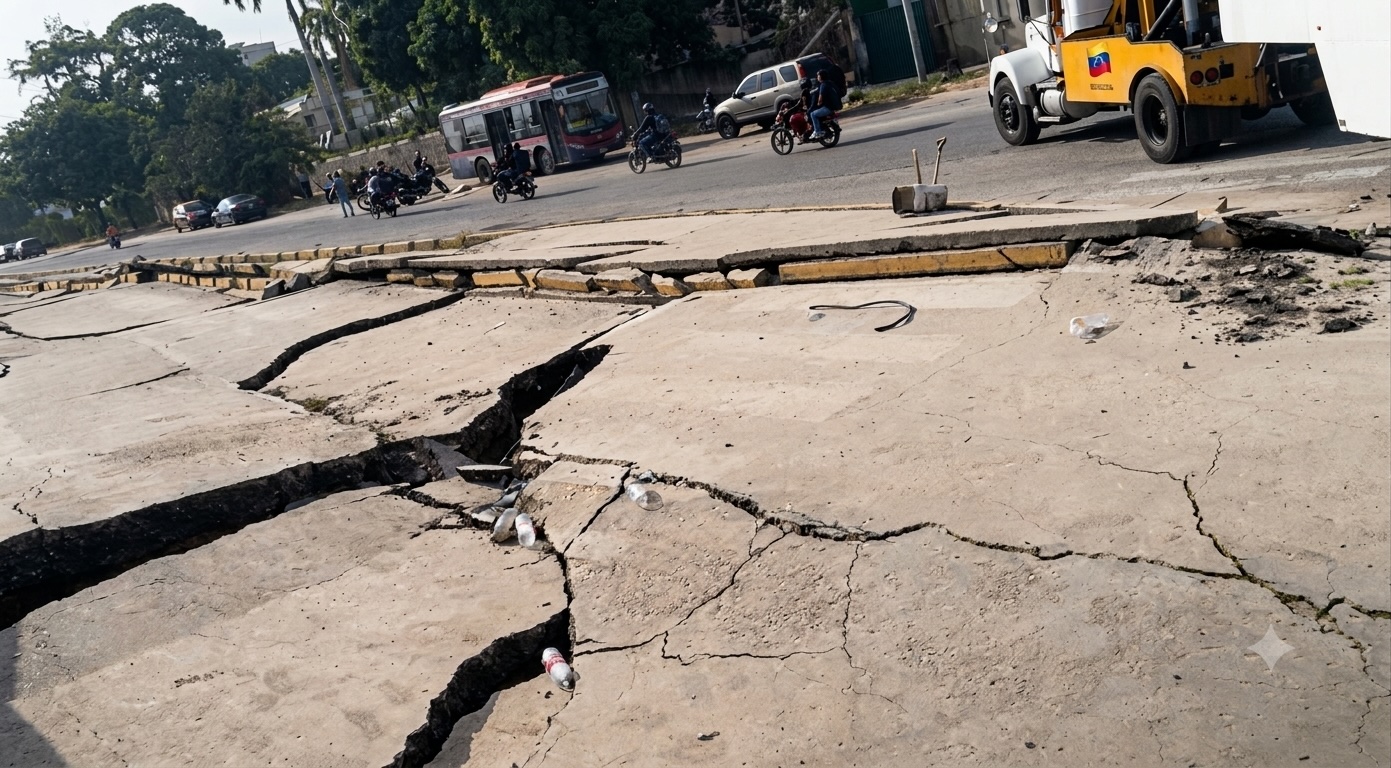
The rare double quake has left more than 3,500 dead, with estimates of up to 50,000 still missing or unaccounted for. Nearly 200 buildings were flattened, while preliminary satellite assessments by NASA warn that 58,870 structures were damaged or destroyed.
The economic toll from the disaster — the worst to hit the embattled country in more than a century — is projected to be north of $6.7 billion.
The Trump administration has so far shown no sign of reinstating TPS for Venezuelans despite the scope of the destruction. TPS is typically granted to individuals fleeing countries beset by war, violence and/or natural disasters.
Hours before the quakes struck, a plane carrying 147 Venezuelans deported from the US landed in the country and were housed in a complex near the epicenter. Of the total, only 12 have so far been confirmed alive.
Lawmakers, meanwhile, have begun to sound the alarm.
On June 29, Democratic Representative Seth Moulton of Massachusetts introduced the TPS Relief Act, which would restore judiciary oversight over TPS cancellations. The measure would overturn a June 25 Supreme Court ruling that gave the Department of Homeland Security (DHS) ultimate authority over such decisions.
DHS has moved to end TPS designations for 13 of the 17 previously designated countries. Critics contend the terminations fail to consider actual conditions on the ground in the affected nations.
Moulton is joined by Republican Miami Congresswoman María Elvira Salazar, who has called on the president to extend TPS protections for Venezuelans by 18 months in the wake of the earthquakes and to halt continued deportations.
“We cannot deport hundreds of thousands of people from the country overnight,” Salazar wrote in a July 6 post on the social media platform X. “Simply put, today it is not safe to return them to their countries. It is not an option.”
There is also growing criticism over the Venezuelan government’s own response to the catastrophe both from within the country and from Venezuelans abroad.
“My parents were rescued, not by authorities, but by an engineer named Ángel and his mother, Milagros, a doctor who turned her home into a refuge and treated the wounded with her own medicine,” said Victor, who is originally from Venezuela and now lives in Los Angeles.
He says a childhood friend remained buried with his youngest son for days after the disaster.
Victor’s parents lived in the Hugo Chávez Frías Urban Development, a government complex of four-story buildings in La Guaira that were almost completely destroyed by the quakes. He initially assumed they had perished after videos began circulating on social media showing the complex in ruins.
“My mother was saved because she was in the street at the time of the tremor,” recalls Victor, “and my father, who was on the first floor of the building, survived by holding tightly to a water pipe anchored to the ground while the structure cracked.”
Recovery efforts are being hampered by severe shortages of equipment, food and other essentials, and, in some cases, official interference. Medicines are also reportedly in short supply.
Victor’s father suffers from diabetes, while his mother has early-stage dementia. He recently launched a GoFundMe campaign hoping to raise money to support his family.
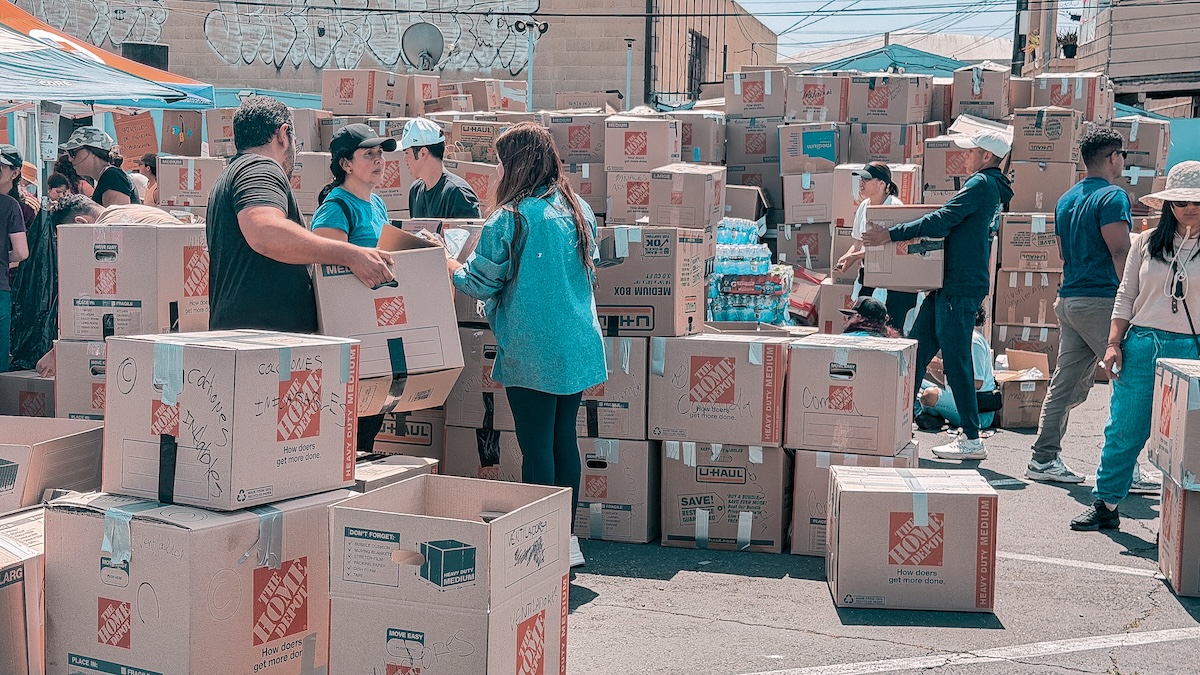
Venezuelans in the Bay Area, meanwhile, have united to send aid to their compatriots. Donation centers were opened in San Francisco, Walnut Creek, Oakland, and San Jose.
On Sunday, July 5, around 1,000 50-pound boxes departed Oakland for Florida before heading to Venezuela. The shipment is being handled by the Florida-based non-profit Global Empowerment Mission (GEM), which will distribute the aid directly to victims through local networks.
“We know many are worried about the donations being commandeered by the government,” said Alicia Molina, who helped organize the aid campaigns. “That’s why we teamed up with GEM, who are independent and give us the certainty that everything will reach those in need.”