


Strike Enters Day Three as Negotiations Continue
Picket lines and school closures continued into day three of the San Francisco teachers’ union strike, with negotiations expected to last into the night.
Some agreements were reached in Tuesday night’s bargaining, including a 10 percent wage increase for classified employees. However, negotiators have not reached consensus on key issues, including healthcare benefits, class sizes, staffing, and compensation.
United Educators of San Francisco called for urgency from the district in a statement Tuesday, saying, “The district continues to show a lack of urgency to reach an agreement that centers on our students and their needs. Tonight, we received a workload proposal that will not meet the needs of our special education students, and a healthcare proposal that still puts our families at a loss.”
SFUSD Superintendent Maria Su also urged urgency at a Wednesday morning press conference. “Our offer is generous, and we’ve figured out a way to make sure we can pay for it in a fiscally responsible way. We need to reach an agreement now. We need UESF to come to the table and engage with a real sense of urgency. With our current proposal, we are putting money back in the pockets of our educators with a significant increase in compensation and healthcare benefits.”
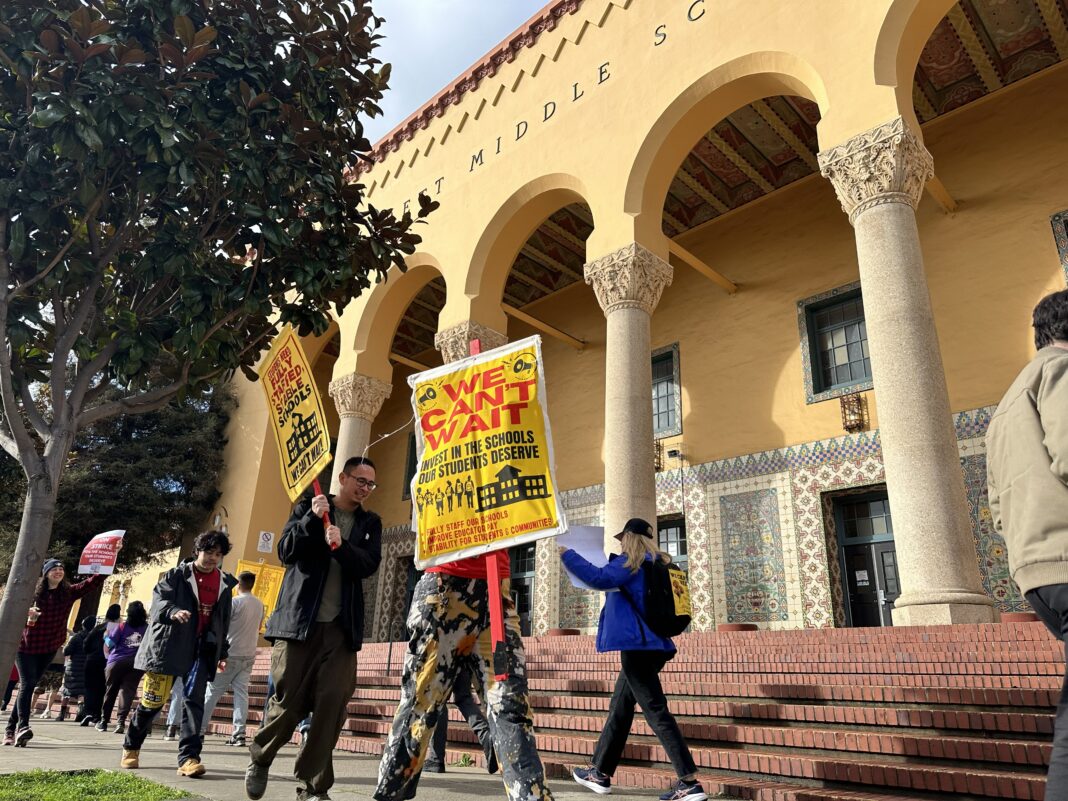
ACoM went to Everett Middle School in the Mission District to check in on educators and the students joining them on the picket line.
Special Education Teachers Say Support Is Central
Laura McKinney is a Special Education teacher at Everett. More support and benefits for SPED educators like her at the center of the negotiations.
“On a Wednesday I usually see many of my students on my caseload. I support them in math and in English language arts class. I miss the students. I miss you guys out there a lot. We’re here for you, we’re fighting for you, and the families we serve. We’re here for ourselves obviously but mostly for our students. We want school to be the best it can be for them and that means supporting their educators also.”
Students Join the Picket Line
Joseph, 14, is an 8th grader at Everett and lives nearby. He says their classrooms are under supplied, and is happy to see his teachers demanding more resources.
“We’re fighting for teachers to have more money and better healthcare. We need a lot more supplies and stuff, too. More erasers, pencils, colors, all of that. We’re out of materials most of the time, the textbooks are old. I think it’s inspiring seeing all my teachers, to know what they’re doing and fighting against SFUSD to get more money for us.”
“A lot of kids are happy they’re not at school, but a lot of them are concerned about teachers not working and not getting paid. I’ve been out here all three days, so hopefully it ends today, but if not I’ll be here tomorrow. On Wednesdays I normally have Science, ELA and music. It’s a fun day, I’m sad I’m missing it.”
Newcomer Students and Vulnerable Families
Adrian Martinez teaches 8th grade English and coaches track at Everett, among other roles. He leads traditional classes, as well as newcomer classes for immigrant students learning English for the first time. He says those students are especially vulnerable amidst the strike because they rely on much of the school’s services.
“This is definitely a very rigorous time for my students, they’re navigating a lot of things. Unfortunately, a lot of our population is unhoused, and they do rely on school for food, clothing, just to have somewhere to go every day. I know a lot of my newcomer students are deeply impacted, and are probably living in their small apartments, struggling to find food, struggling to make connections, struggling to see their teachers, and struggling to get the education that they deserve. Especially here in the Mission in San Francisco.
“SFUSD has had 11 months to come to the table and make the schools our students deserve. So it’s just unfortunate that now they are suffering the most from this strike. We want them to know, and we want to reiterate time and time again, this strike for our students primarily.”
Students Stay Connected and Show Support
And have you been in touch with any of your students? How are they holding up in the past few days? What are they doing to spend the time?
“A few students have reached out and asked how they can support us. A lot of students were there yesterday, they walked with us from Dolores Park to Civic Center. A lot of them have even said they miss being in school and it’s difficult not seeing us every day. I said I missed them too, because if you put it objectively, as a teacher, the people I hang out with the most are my students. We have a couple of students here now rooting for us. So they want to be involved, but they also want to go back to school just like us.”
“They seem to support the strike. I don’t want to speak for them, but it seems that they are definitely understanding the implications of the strike and not seeing it as a day off of school, but as a day off to support the teachers, support the paraprofessionals, support the substitutes, support their peers, support the newcomer students. A lot of our mainstream students are coming out and saying, my community and my school community serves underprivileged communities and historically marginalized communities. The least I could do is fight for those people that are deserving of education that I’m getting as well.”
Living in San Francisco on a Teacher’s Salary
What are the challenges living in SF as an educator?
“My mother is a teacher as well, and teaching used to be the profession that people went to for health insurance for their dependents. It used to be the career people go to because it came with so many benefits. I live in the city, North of the Panhandle. Living here as a teacher is definitely challenging. Half of my paycheck goes to rent, the other half goes to insurance.”
“It’s not perfect and it is definitely a life of paycheck-to-paycheck, but I don’t think that the wage increases are the priority here. Would it be helpful and would it be great to make a livable wage for San Francisco? Yes, but the main argument of our fight is always for our students. And yes, it’s difficult, but I love this city. I love my school. I love that community and I’m continuing to fight for them and the schools they deserve.”
Immigration Climate and Student Anxiety
What have your immigrant students been sharing with you about their unique struggles lately, in regards to the climate around immigration?
“We have definitely felt it first-hand here. We predominantly serve Latino communities at this school for newcomers. And as a Latino myself, I definitely feel a lot of stress and a lot sadness for what is going on in our country and the picture that’s being painted about our students. It often diminishes their self-esteem. It makes them feel like, well, I don’t need to learn English. I don’t need to go to school. Everybody’s gonna look at me some sort of way, just because of the color of my skin, just because of the language I speak.”
“So it’s a challenge that we’ve battled since last year, but I know that I always tell them, show the world that you are capable, show the world that you can change, and that’s what I try to inspire in them. From what I’ve seen them dealing with right now, they are very scared of the political climate, but I’m glad that we have won sanctuary so far, for them to know that school is still a safe place for them come and learn and get the future that their parents want them to have and the future they know they can have. But again, it is a very scary time that we’re living in. And I always tell them, live your life, focus on your education, and you’re going to be alright. And they’ve been trying to follow that.”
Chris Alam is a California Local News Fellow with the UC Berkeley Graduate School of Journalism.