


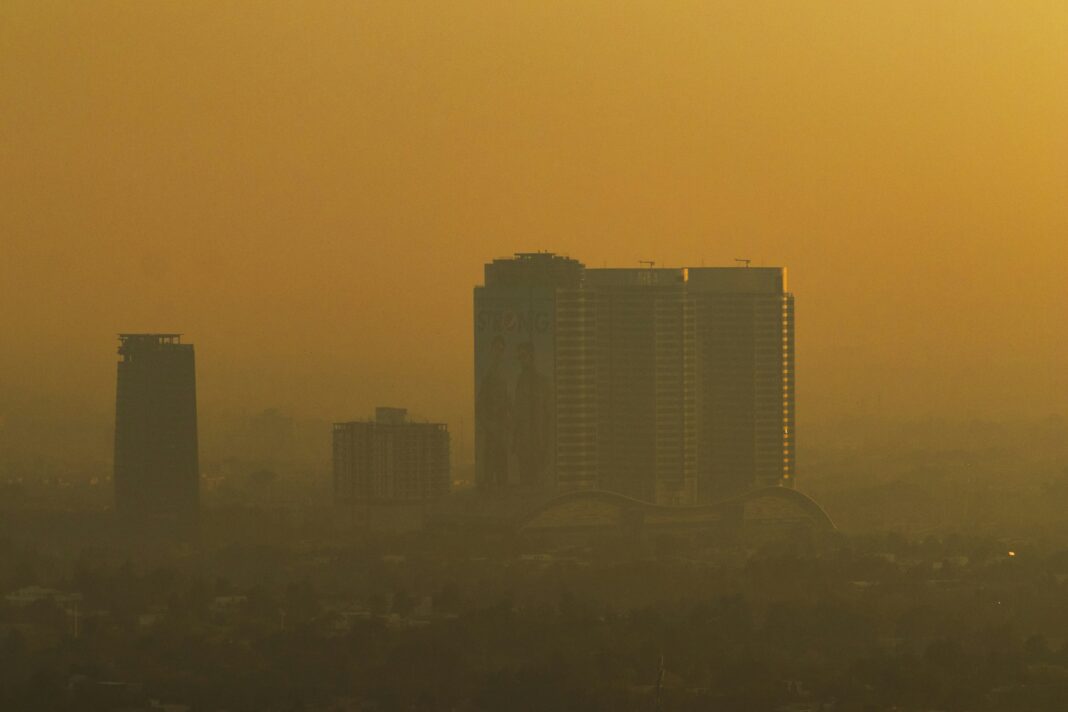
Most of northern and eastern Pakistan and parts of western India are currently covered in a blanket of toxic smog so thick that it can be seen from space, via NASA satellites.
The smog has caused air quality to deteriorate to toxic levels in the major metropolitans of Lahore, Multan, Delhi, and Chandigarh, forcing authorities to shut down schools, parks, and public places in a bid to limit exposure and curb further pollution, Reuters reported. Hundreds of people have been hospitalized due to very poor air quality over the last few days.
Swiss group IQAir, which draws data from 14 regional monitoring stations, rated Lahore the world’s most polluted city in the world Nov. 13, with an air quality index score of 1165, more than 120 times the levels recommended by the World Health Organization. Pollution rose to 1900, an unprecedented level, Nov. 10-11.
Gas Chambers
The news magazine India Today has called New Delhi a “gas chamber,” as its AQI in West Delhi reaches 437, noted as severe.
Primary school teacher Rafia Iqbal told Al Jazeera the smog is so thick people cannot open their doors or windows. “Because then the smog comes in and its terrible,” she said. People in South Asia already suffer one of the highest rates of respiratory illnesses in the world, including COPD and asthma. The highly-polluted air worsens those illnesses.
One-tenth of global asthma cases live in South Asia. Industrial emissions and burning biomass for fuel make up some of the predominant contributors for dirty air. Poor quality of vehicle fuel, as well as a rapidly increasing number of cars on the roads, contribute to poor air quality.
But another annual event — the burning of rice fields, which occurs from October to November — also creates the thick, polluting smoke.
Fodder or Fire?
While regulations and fines exist for burning crop residue, farmers continue to employ the easy way to clear fields.
Environmentalists in South Asia are urging agriculturists to consider harvesting crop residue to use as fodder to feed animals. But harvesting fodder is far more expensive than simply burning fields.