


Fatmeh Bakhit | Al Enteshar Newspaper
The sound arrives before the crowd does.
A single drumbeat cuts through the afternoon, steady and patient, followed by a second, then a third. Someone hums a melody older than the city itself. By the time you notice the dancers, a small circle has already formed beneath the trees. No flyers. No permit taped to a light pole. Just people who know when to show up.
This is how Arab American culture often appears in Los Angeles, quietly and collectively, in public.
Across the city, parks have become some of the most reliable spaces for Arab American art, memory, and community to take shape. They are where traditions are practiced rather than performed, where culture is lived instead of displayed, where participation matters more than polish.
“Parks are where we breathe,” says Leena Mansour, a Palestinian American organizer who has spent years building informal cultural gatherings across the San Fernando Valley. “You do not have to translate yourself. You do not have to explain why you are there. You just show up.”
For Arab Americans in Los Angeles, culture has never stayed neatly indoors. Weddings spill into parking lots. Family gatherings stretch onto sidewalks. Music travels from living rooms into streets and open space.
Parks make room for that overflow.
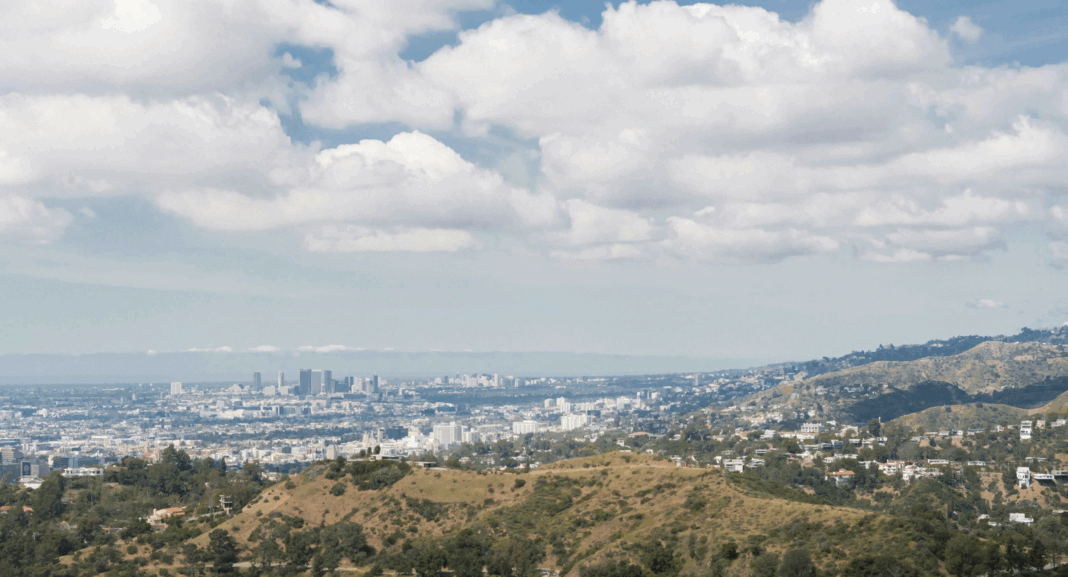
In Griffith Park, darbuka rhythms echo between trails as drummers gather in loose circles, some experienced, some learning by watching. In Pan Pacific Park, dabke lines form without instruction. Hands link instinctively. Steps are corrected gently. Elders sit nearby, watching with quiet approval. In MacArthur Park, Arab American food vendors join larger cultural festivals, their tables blending into the wider movement of the park, familiar and unremarkable in the best way.
“There is freedom in not having walls,” says Yousef Darwish, a Lebanese American organizer who teaches drumming to community members throughout South Los Angeles. “Inside, people expect something polished. Outside, they expect you to be real.”
Darwish says parks were where he learned to play, long before formal classes or workshops were an option. He watched uncles, neighbors, and strangers at gatherings that slowly took over public space.
“No one called it a class,” he says. “You learned because you were there. You learned because you listened.”
For many Arab Americans, particularly Muslims, parks offer something increasingly rare, visibility without interrogation.
At a time when public expressions of Arab and Muslim identity are often politicized or misunderstood, parks allow community life to unfold without scrutiny. During Ramadan, community iftars spread across lawns as prayer mats unroll beside picnic blankets. Children run between rows of shoes. Conversations move easily between Arabic and English. Nothing is hidden. Nothing is announced.
“It is not about making a statement,” Mansour explains. “It is about existing in a way that feels normal to us.”
She notes that parks allow Arab American identity to show up outside the narrow frames it is often placed in, whether political, foreign, or threatening.
“In the park, we are just neighbors sharing space,” she says. “That matters more than people realize.”
For many families, these gatherings are about more than art. They are about continuity.
Parents bring children not just to play, but to listen, to watch, to absorb. A child learns the rhythm of a drum before understanding its history. A teenager joins a dabke line without knowing the name of every step. Memory is passed through proximity.
Darwish describes drumming circles as spaces of care, especially during moments of grief or uncertainty. After global crises or local violence, people often gather without formal planning, drawn together by sound and familiarity.
“Sometimes the park becomes a place to process,” he says. “You do not have to talk if you do not want to. The rhythm carries it.”
Los Angeles parks reflect the city at its most honest. In neighborhoods where Arab American communities intersect with Black, Latino, and other immigrant communities, culture overlaps rather than competes.
Dabke meets folklórico. Drumming blends with birthday music. A soccer game pauses briefly as dancers pass through. Art happens without permission, without branding, without a clear beginning or end.
“Culture survives through practice,” Darwish says. “If you stop showing up, it fades.”
As public space becomes more regulated and communities face increased scrutiny, these informal gatherings take on greater meaning. They are temporary, unsanctioned, and deeply human. They exist because people insist on being present.
In Los Angeles, Arab American culture does not always ask for a spotlight. Sometimes it just finds a patch of grass, listens for the rhythm, and begins.
This story was produced by American Community Media in collaboration with the Laboratory for Environmental Narrative Strategies (LENS) at UCLA as part of the Greening American Cities initiative supported by the Bezos Earth Fund. Read more stories like this by visiting the Greening Communities homepage.