



While Susan Alleman thought surviving breast cancer would mean putting the hardest chapter of her life behind her, it turns out that was just the start of her travails. Alleman is among millions of Americans who are now seeing their health care premiums rise.
Many are being forced to choose between needed care and basic necessities.
“Just because someone says they’re a cancer survivor, that doesn’t mean that the journey is over,” said Alleman. “It’s the beginning of its own journey.”
Alleman spoke during a recent news briefing organized by the non-profit Families USA. She explained that when she was first diagnosed she had bronze care coverage under the Affordable Care Act (ACA) with low monthly premiums and high deductibles. Her treatments were covered, including immunotherapy, at $42,000 per visit.
Alleman added that she has kept her plan, even though it now costs $300 more per month. The rise comes after Congressional Republicans allowed federal health care subsidies to expire last year.
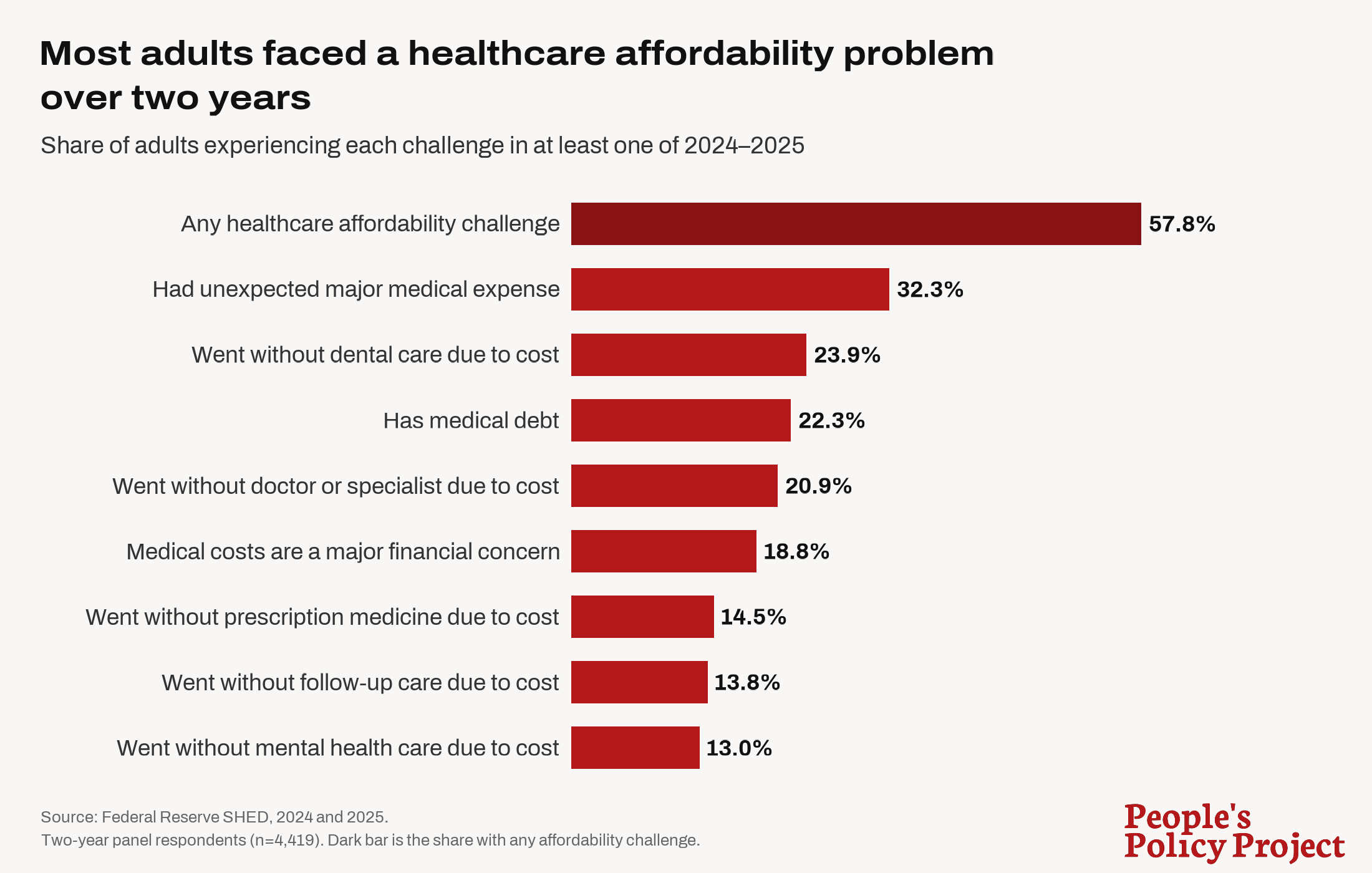
The more expensive plan also means she has to meet a $10,500 out of pocket maximum before coverage kicks in. The Lincoln, Nebraska resident now finds herself skipping follow-up care, including specialist visits and diagnostic tests, because she cannot afford it.
“I have forgone visiting my oncologist. I’ve missed my appointments, and I’ve been unable to get the testing that I need,” said Alleman.
Another rate hike
Alleman’s situation is not unique. Consumer advocates warn that millions of Americans who buy their own health insurance are facing another year of steep premium hikes. They are then forced to choose between necessities such as food and house payments versus health care.
Families USA analyzed preliminary filings insurers submitted to state regulators. The organization found that ACA premiums are set to increase by 15% for 2027. That increase follows average premium hikes of roughly 25% for 2026.
Much of the increase can be attributed to the expiration of enhanced federal premium tax credits. Rising medical costs and a shrinking insurance pool as healthier consumers leave the marketplace are also factors, notes Families USA.
“After years of single-digit percentage rate increases since 2019, the rate filings to date show a second year of double-digit percentage rate increases,” said Anthony Wright, executive director of Families USA.
ACA Enhanced Premium Tax Credits
Signed into law in 2012, the ACA created marketplaces to buy health insurance. Plans covered essential benefits and had no denials for pre-existing conditions. The ACA also provided affordability assistance for those under four times the poverty level.
In March 2021, Congress enhanced ACA tax credits. People buying a silver plan paid no more than 8.5% of their income. “This policy was wildly popular, driving enrollment from about 12 million enrolled in 2021 to a record high of over 24 million enrollees by 2025,” said Wright.
He added, “But that success has stopped … Despite a full court press from advocates, patients, and a bipartisan majority in both the House and the Senate supporting these tax credits, President Trump and Congress blocked their extension last year.”
According to Wright, that decision to end the enhanced tax credits has “made people have to pay double for premiums on average, often hundreds, if not thousands of dollars more,” said Wright, noting that 4 million people have already dropped off ACA health insurance coverage as a result.
Others have switched to lower tiers of coverage, leaving them under-insured. “They are literally paying more and getting less,” said Wright.
Everyone pays more
Drop-offs, meanwhile, are reshaping the health insurance market for everyone else.
“As enrollment has declined, the risk profile among remaining enrollees has deteriorated,” said Jennifer Sullivan, senior advisor for market insurance regulation at Families USA. “Insurers are expecting that those who remain enrolled will need more care, which will cost more, and so they are increasing rates for everyone to absorb those increased costs.”
Insurers’ rate filings consistently point to two major drivers, Sullivan said: escalating hospital and prescription drug prices and a smaller, sicker risk pool.
She also warned that uncertainty surrounding federal marketplace policies continues to affect pricing. Although federal courts have temporarily blocked several new enrollment restrictions — including shorter enrollment periods and additional documentation requirements — insurers must still account for the possibility that those policies could ultimately take effect.
Double digit rate hikes in Georgia and Washington
The impact is especially pronounced in states already seeing some of the nation’s largest proposed increases. In Georgia, for example, insurers have requested premium increases ranging from about 12% to more than 54%, averaging nearly 21%.
The expiration of enhanced premium tax credits contributed to enrollment falling from more than 1.5 million people to about 950,000 — a 37% decline, said Whitney Griggs, director of health policy at Georgians for a Healthy Future.
“That means that people are giving up their plans,” Griggs said. “This means they’re no longer able to get the care that they were getting.”
Washington state is experiencing an even larger proposed increase.
Insurance companies there have requested average premium hikes of more than 22% for 2027, according to Emily Bryce, co-executive director of Northwest Health Law Advocates.
“If those rates are approved, the average silver plan for next year will cost $970 a month. How is any family supposed to afford that,” she queried.
“The folks that I’m talking to every day are doing survival math,” she added. “They’re forced to choose between affording their health coverage and other basic needs like food and rent.”
Private equity
Several speakers also pointed to broader healthcare cost pressures, including consolidation among hospitals and physician practices.
Responding to a question from American Community Media about private equity’s role in rising costs, Wright said investors have increasingly purchased physician groups and healthcare providers, allowing some companies to gain greater market leverage and negotiate higher reimbursement rates.
“That is a driver,” Wright said. “They are using the fact that there are market failures in healthcare — places where people can leverage market and monopoly power to charge ever-increasing rates.”
State advocates said many states still lack the authority or data needed to fully track private equity activity or challenge consolidation before it drives up prices.
Public charge
Asked whether the public charge rule scheduled to take effect Sept. 18 could further shrink the insurance pool if immigrants withdraw from coverage, Sullivan said similar policies during the first Trump administration discouraged many eligible families from enrolling.
The rule denies residency status, visas and other forms of admission into the country for those deemed likely to rely on government subsidies.
“We know that the public charge rule, historically, caused a tremendous chill,” she said. “Any time you’re seeing people peeling off from the marketplace who are healthy and should be there, that has an impact on the rates. We pool risk to keep rates down for everybody.”
Despite the proposed increases, advocates urged consumers not to abandon coverage before comparing plans during open enrollment.
Consumers should update their income information, carefully compare premiums against deductibles and out-of-pocket costs, verify that their physicians remain in-network, and seek assistance from marketplace navigators or certified enrollment counselors, speakers said.
American Community Media will host a special news briefing on health care affordability on Sept. 18.

