



In early September, Francisco, 25, was on his way to church. It was evening, the end of a long work day, when he found himself at a DUI checkpoint near the Figueroa Street off-ramp in Downtown Los Angeles.
Not having consumed any alcohol, Francisco, a native of Nicaragua, wasn’t concerned.
“I have nothing to hide,” he remembers thinking. Speaking in Spanish, he said, “I haven’t committed any crime, and I haven’t been drinking, so they aren’t going to do anything to me.”
Police officers approached his window and, after routine questioning, asked him to step out of the car. Despite passing a breathalyzer test with a 0.000 reading, the officers insisted on two additional tests.
Francisco (who asked that we only use his first name) says it was at that point he grew concerned.
Despite passing all three breathalyzers, the officers insisted that he go through a series of field sobriety tests, all of which he again passed. Then one of the officers informed Francisco that, in spite of all the evidence to the contrary, he was suspected of being under the influence of a narcotic.
“We are going to take you into custody,” the officers informed him, “we are going to give you a blood test; if it comes back negative, you will be released tomorrow at 11:00 in the morning.”
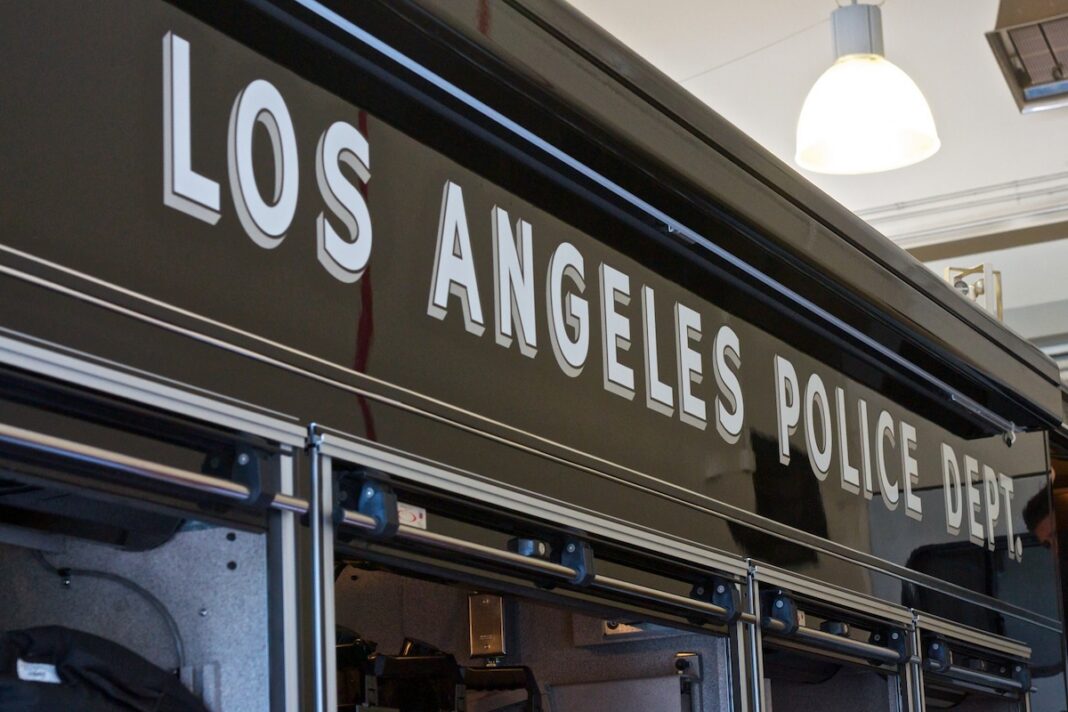
It was 8PM on a Thursday, Sept. 10. Francisco was handcuffed and taken directly to the LAPD Metropolitan Detention Center.
Francisco first arrived to the US after having traveled from Nicaragua to Mexico, where he applied for and was granted a 30-day humanitarian parole visa, part of a Biden-era program extended to migrants from four countries: Venezuela, Cuba, Haiti and Nicaragua.
Francisco crossed the border from Ciudad Juarez to El Paso, Texas, in 2022, later making his way to Los Angeles. He acknowledges he failed to complete the necessary administrative renewal at the end of the 30-day period, saying he was unaware of the legal requirements.
He eventually began working in Los Angeles as a food delivery driver. His weekly routine included Thursday evening stops at the church he attended. On the day of his arrest, a Thursday, he had worked until 6PM, he said, at which point he hopped on Interstate 710, the Long Beach Freeway, headed toward church.
He never made it.
ICE on the other side
Once inside the Metropolitan Detention Center, Francisco was fingerprinted and then administered a blood test to determine whether he had any illicit narcotics in his system. The tests came back negative. His prints, meanwhile, showed no criminal record, no outstanding warrants, and no pending deportation order.
It was by then midnight. Francisco was transferred to a holding cell. That morning, at 11AM, he was informed that he was free to leave.
“I felt very happy, very joyful because I was going home. We had even planned with another companion to go eat chicken nearby, because there is a very good restaurant there in Downtown,” Francisco recalled.
Station guards handed Francisco his personal belongings: his Nicaraguan passport, other identification documents, his wallet, phone, and a chain necklace. With everything in hand, they guided him toward the exit.
Unbeknownst to Francisco, it wasn’t freedom waiting on the other side, but federal Immigration and Customs Enforcement (ICE) agents.
“I had barely stepped outside when I saw five ICE agents waiting for me right there, at the very door.”
According to Francisco, the officers addressed him directly by name. When he confirmed his identity, they began to close in on him.
“I kept asking them why they were detaining me if I had no record,” he said, adding the agents assured him he would only be processed and that “they weren’t going to deport me.”
Curbside transfer
California’s SB54 prohibits state and local law enforcement from collaborating with federal immigration agencies except in cases involving violent or otherwise serious offenders. That includes a prohibition on curbside transfers, where law enforcement notifies ICE of an individual’s release date or time from jail.
But in LA and across the state there is mounting anger over what many say is evidence of just that. Protestors in East LA took to the streets on Oct. 26 accusing the sheriff’s office of working with ICE, which launched a 45-day enforcement surge earlier that same month. Data suggest hundreds have been detained in Los Angeles alone since the start of the operation.
High school teacher and community organizer Ron Gochez with the group Unión del Barrio is adamant. “There is direct evidence of collaboration, and we’ve sent it to [Mayor Bass], but they deny it. They won’t admit it,” he said.
ACoM has not been able to confirm Gochez’ statements. But the issue prompted LA mayor elect Nithya Raman to promise during her campaign that if elected she would fire the city’s police chief, Jim McDonnell. She told a local ABC affiliate of ”credible reports that LAPD has actually shared information with ICE, including information from our fingerprint databases…”
Both McDonnell and Mayor Bass deny the allegations.
Civil rights organizations including the ACLU and the Asian Law Caucus, meanwhile, argue curbside transfers like the one Francisco experienced violate immigrants due process rights and are designed to circumvent SB54.
Francisco says he was detained by the ICE agents without being informed of his rights. He was transported from the central station to an ICE holding center about a mile away by his estimate. Once there, he was locked in a cell alongside other men arrested that same day.
“I was in a cell with [people] from Turkey, from Turkmenistan, from China, Colombia, El Salvador,” said Francisco, who maintained a notebook where he detailed his experience.
Holding freezer
Around four in the afternoon, he said, they were handed over to guards with Geo Group, one of the nation’s largest private prison contractors and until recently operator of the Adelanto detention center, about three hours east of Los Angeles.
Earlier this month Geo sold the Adelanto center to the federal governemnt for a price tag of $950 million. The center remains the focus of numerous lawsuits over repeated violations.
Handcuffed and shackled at the waist, the Geo guards loaded the men onto a transport bound for Adelanto where they arrived three hours later. It was 8PM and, once again stripped of all his possessions, Francisco was placed in one of the “hieleras” or holding freezers, named for the frigid conditions inside.
He spent the night shivering.
The next morning guards asked if he was willing to sign a form agreeing to be deported. When he refused, he was transferred to another cell with 23 other men.
The next day, on Sept. 13, Francisco managed to contact his church leader, who told him of another pastor currently being held at Adelanto.
“I went and looked for him. He took me in, gave me a notebook, a Bible, a pencil… he told me practically everything, everything, everything I was going to experience.”
According to Francisco, that included showers with water temperatures so high they left burn marks. “We had to get all the way down on the floor so the water would fall a bit softer,” he said.
The food, he continued, was “inedible.”
Francisco says all this was done to break immigrants down psychologically in order to compel them to agree to voluntary departure.
During his confinement, Francisco required medical attention, and although he formally submitted requests, he asserts that the facility took days to respond, ultimately providing only painkillers that proved useless against the extreme cold of the housing units.
Francisco’s account aligns with findings from an investigation by the California Department of Justice that described conditions in facilities such as Adelanto as “cruel, inhumane, and unacceptable.”
Habeas petition
After 27 days in detention, Francisco got some good news. He would be released thanks to a petition for a writ of habeas corpus filed by his attorney challenging his unlawful detention.
“When the guy gave me that news, wow! It was… the most beautiful thing I’ve ever heard in my life,” recalled Francisco. He was released at 5PM that day.
Today, Francisco attends regular check-ins with immigration authorities, carries a monitoring phone that must be answered the moment it rings, and has an assigned immigration officer overseeing his case.
His sole hope is to remain in the country: he explains that returning to Nicaragua may not be viable or safe, as the regime of Nicaraguan leader Daniel Ortega has labeled hundreds of Nicaraguans who have migrated to the United States “traitors to the homeland.”
In the meantime, he says he is grateful to be free, though he still wonders why he was arrested in the first place. Whatever savings he had have been eaten up in legal fees. He also struggles to sleep as memories of his time in detention run through his mind.
And as the Trump administration continues to pursue its campaign of mass deportations, his future in the US remains uncertain.
“Inside, one doesn’t think about tomorrow or the future,” he noted, reflecting on his time in detention, “being inside, one only thinks about how to stay alive today.”
Araceli Martinez contributed reporting for this story. It was produced as part of “Aquí Estamos/Here We Stand,” a collaborative reporting project of American Community Media and community news outlets statewide.