


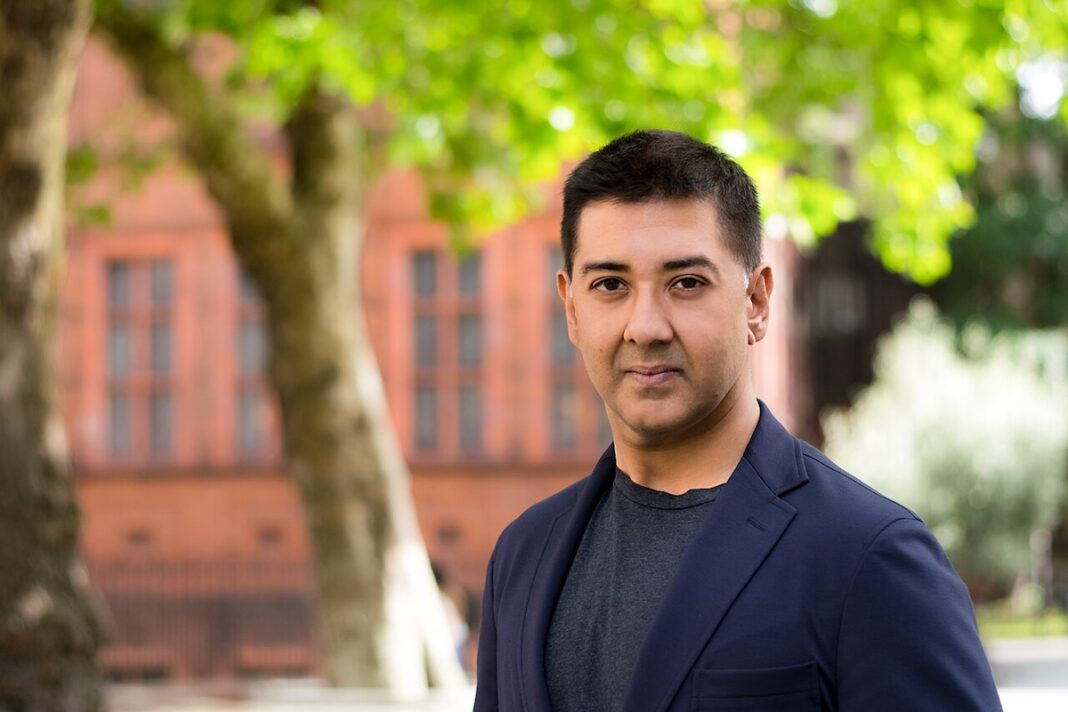
In a year filled with aggressive, often hateful rhetoric out of the White House, it comes with no small hint of irony that among the administration’s end-of-year targets would be Imran Ahmed, the executive director of the Center for Countering Digital Hate (CCDH).
The details are complicated, but Ahmed and the CCDH may not have been targeted for their anti-hate efforts but rather for their work combating online disinformation.
On December 23rd, Undersecretary of State Sarah Rogers posted on X:
WE’VE SANCTIONED: Imran Ahmed, key collaborator with the Biden Administration’s effort to weaponize the government against U.S. citizens. Ahmed’s group, Center for Countering Digital Hate (CCDH), created the infamous “disinformation dozen” report, which called for platforms to deplatform twelve American “anti-vaxxers”, including now- HHS Secretary @SecKennedy.
Although unclear what the sanction might be or what the British-born Ahmed and his organization did in collaboration with the Biden Administration to weaponize the government against U.S. citizens, the post does make clear the Trump Administration is considering deporting Ahmed, a green-card resident of NY.
The justification for the deportation effort remains vague, in keeping with the administration’s repeated disregard of legal details supporting its proposed actions. But a subsequent press release from Secretary of State Marco Rubio makes a convoluted argument explaining next steps against Ahmed and four of his associates.
These radical activists and weaponized NGOs have advanced censorship crackdowns by foreign states—in each case targeting American speakers and American companies. As such, I have determined that their entry, presence, or activities in the United States have potentially serious adverse foreign policy consequences for the United States.
This end-of-year Trump administration attack on a political enemy, immediately paused by a Temporary Restraining Order from Federal District Court Judge, Vernon Broderick, on Christmas day, may seem something of a sideshow at a point when the Trump administration has detained and deported hundreds of thousands of immigrants, most of whom are not criminals, often without regard to due process.
But Ahmed’s case is arguably an important milestone in Trump’s ongoing violations of the 1st amendment. While currently paused, the danger is that his deportation could eventually be rubber-stamped by a Supreme Court majority blindly buying into administration arguments of virtually unlimited executive power.
Administration officials accuse the CCDH of “weaponizing” research, data analysis, publications, and advocacy statements to target individual citizens and organizations. Founded as a British-based independent non-profit in 2018, the CCDH’s early work focused on debunking antisemitic lies circulating on the internet. Its mission later broadened to encompass debunking online propaganda based on falsehoods.
While it is hard to say which of CCDH’s stances or Ahmed’s recent speeches and advocacy efforts might be considered as evidence of “weaponizing information,” the organization’s “disinformation dozen” report appears to be the locus of the administration’s ire.
The meticulously documented report, published in 2021 and referenced widely by the Biden Administration, identifies 12 individuals—including current HHS Secretary Robert Kennedy—as primary sources of anti-vaccine misinformation. It also offers a compelling rationale for CCDH’s efforts to disrupt online systems that facilitate politically motivated disinformation.
Digital spaces have been colonised and their unique dynamics exploited by fringe movements that instrumentalise hate and misinformation. These movements are opportunistic, agile and confident in exerting influence and persuading people. Over time these actors, advocating diverse causes – from anti-feminism to ethnic nationalism to denial of scientific consensus – have formed a Digital Counter Enlightenment. Their trolling, disinformation and skilled advocacy of their causes has resocialised the offline world for the worse.
While Ahmed and his colleagues are clearly not a threat to U.S. national security, they do threaten to constrain online systems central to the dissemination and amplification of misinformation at the heart of the MAGA movement. And, by extension, Trump’s own ability to lie with impunity.
Trump, during his December 18th address on “America’s Historic Comeback,” declared without evidence;
We’re deporting criminals [and] restoring safety to our most dangerous cities… Drugs brought in by ocean and by sea are now down by 94%. We have broken the grip of sinister, woke radicals in our schools… I’ve restored American Strength, settled eight wars in ten months, destroyed the Iran nuclear threat, and ended the war in Gaza.

The attack on Ahmed and his CCDH colleagues—now banned from entering the US—marks an escalation of a wide-ranging attack on individuals and organizations that counter Trumpian lies with evidence or oppose policies that are unlawful or dysfunctional.
It also runs parallel to the invasive searches of less-prominent immigrants’ social media accounts for vaguely defined evidence of antisemitism in order to deny admission to the US, to institute deportation proceedings, or deny asylum petitions.
It is particularly important to remember that the 1st amendment was crafted to not only protect freedom of expression but, also, to protect freedom of association. While internal discussions within the Trump Administration about reprisals against political adversaries may never be fully known, the evidence is the attack on Ahmed stems not only from his statements and writing, but from Trump Administration displeasure with CCDH’s successes in influencing European Union decision-making on the online dissemination of disinformation.
There are already indications of MAGA efforts to suppress dissent with a Homeland Security Committee investigation into pro-immigrant non-profits, including several that have been targeted solely for their research, publications, posts, or litigation about federal government actions.
Soon, we may all become targets. “If your voice had no power,” read one sign during a recent No Kings Day march in California, “they wouldn’t try to silence you.”

