


American Community Media (ACoM) stands in solidarity with our NABJ and NAHJ colleagues in denouncing the federal government’s arrest of former CNN anchor Don Lemon and three other journalists— Nekima Levy Armstrong, Chauntyll Allen and William Kelly.
The arrests come a week after a protest at a church in St. Paul, Minnesota where an Immigration and Customs Enforcement (ICE) officer serves as the local pastor. The journalists have argued they were covering the protest. Statements from the Department of Homeland Security (DHS) suggest Lemon and the others have been charged with conspiracy and violating the First Amendment rights of worshipers.
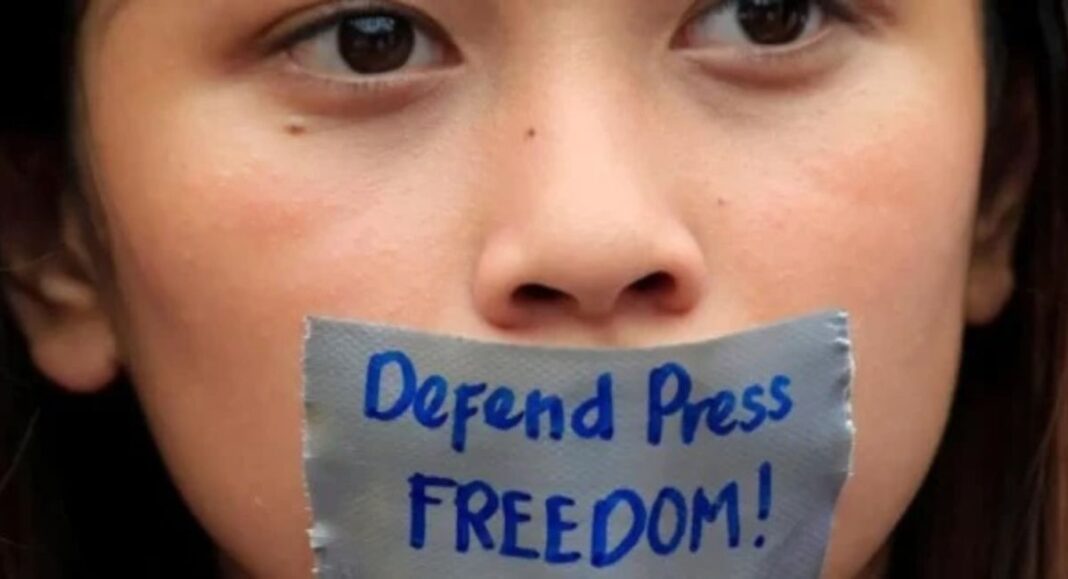
Their arrest isn’t just a violation of the press; it is a calculated attempt to blind U.S. communities to the actions of their government. For audiences of the more than 2,000 ethnic media outlets nationwide, in particular, access to accurate news about civil unrest and government activity is not a luxury—it is a survival tool.
“Ethnic media have long born witness to the struggles of their communities. That impulse, to bear witness, is what enables communities to resist injustice,” said ACoM Director Emeritus Sandy Close.
This is an existential threat to our sector. If law enforcement feels emboldened to handcuff high-profile veterans like Don Lemon, they are sending a clear threat to every local ethnic media reporter working without the safety net of a major network.
As the National Association of Hispanic Journalists notes, on Jan. 25 federal immigration agents in Minnesota deployed pepper spray against independent journalist and NAHJ member Nick Valencia, even after he had identified himself as a member of the press. His is just one among numerous instances of aggression directed at the news media.
“This moment is bigger than one journalist,” reads a statement from the National Association of Black Journalists. “It is about whether the First Amendment has meaning when reporting is inconvenient to those in power.”
When law enforcement criminalizes the documentation of events, such as those that unfolded in Minnesota, they blind all our communities, especially those that are most at risk. ACoM joins the call to halt this intimidation.