


By Eric Alcocer Chávez | Peninsula 360 Press
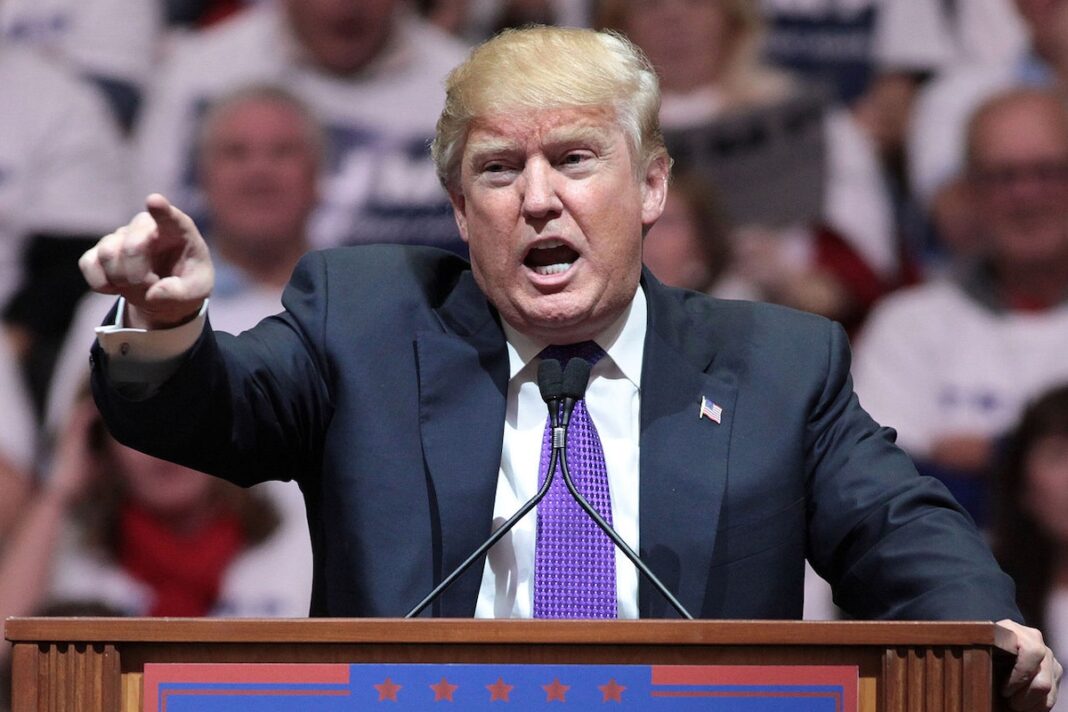
On Jan. 20th Donald Trump, the sone and grandson of immigrants, born in Queens, New York on June 14, 1946, will take office as president of the United States for the second time. Becoming the 47th president of the country, following his tumultuous presidential campaign as standard bearer for the Republican Party. His term will run until January 20, 2029.
Trump, previously known for his involvement in the beauty pageant business and entertainment scene, will be the first American president to hold office after being criminally convicted. While it is unlikely that he will ever see the inside of a jail cell, his legal situation remains uncertain.
After his victory in the November 5 elections, Trump has once again become a source of controversy, especially in the political and economic spheres. His opponent, Vice President Kamala Harris, for her part, has kept a low profile since election night.
As is characteristic, during his campaign and since the election, Trump has lobbed repeated attacks against some of America’s closest allies and trading partners, including Canada and Mexico, even putting aside his remarks threatening an American takeover of Greenland and the Panama Canal.
However, for immigrants, the resounding Republican victory on Nov. 5 – with the GOP taking control of both houses of Congress and the White House, not to mention the conservative majority on the US Supreme Court – has raised alarm bells for the growing immigrant community.
Paradoxically, compared to the 2016 election, where then-Democratic candidate Hillary Clinton won the popular vote despite losing the election, in 2024 more Latinos voted for Trump despite his hateful rhetoric and threats of mass deportations.
This phenomenon is increasingly being described as “lifeboat syndrome” by figures including the author and former Colombian politician Humberto de la Calle, who the day after the election posted on X:
“Once on the boat, there is overcapacity. Those who managed to get on kick off the castaways who are still trying to get on board. And Trump, with his fierce immigration policy, represents them.”
The Spanish writer and literary critic Rafael Narbona similarly wrote in a recent article, “The problem is not just Donald Trump. His voters don’t care that he is racist, xenophobic, misogynist, authoritarian and a convicted felon. In fact, they voted for him for that reason. (…) Latino immigrants with papers also do not feel sympathy for their compatriots. The lifeboat is full and could sink if it picks up more people.”
Trump has promised to deport the more than 11 million undocumented immigrants now in the US, putting at risk not only individual migrants but their families and the communities that depend on them.
The president-elect confirmed that Thomas Homan, former chief of the New York Police and former acting director of Immigration and Customs Enforcement (ICE), will lead immigration policies as “border czar.” Homan will be responsible for overseeing the deportations.
Faced with this threat, Mexico, under the leadership of newly-elected President Claudia Sheinbaum, has announced measures to protect Mexican citizens in the United States, including a mobile application with a “panic button” that will connect individuals facing imminent deportation with the nearest Mexican consulates and other resources.
In addition, Mexico’s Ministry of Foreign Affairs (SRE) has implemented 11 actions to support the Mexican immigrant community in the US, among which stand out: the dissemination of a 24-hour emergency line, consulates mobile phones and financial advice.
Although the alliance that some expected between Kamala Harris and Claudia Sheinbaum did not materialize, the path continues. In the next four years, the free press and non-governmental organizations will play a crucial role in documenting abuses and defending the human rights of immigrants, the LGBTQI+ community and other vulnerable groups.
The challenges are immense, but the Latino community has proven to be resilient and hardworking. As former Mexican President Vicente Fox said: “Mexicans do the work that no one else wants to do.”
In times of adversity, unity will be key: “Latinos united will never be defeated.”