


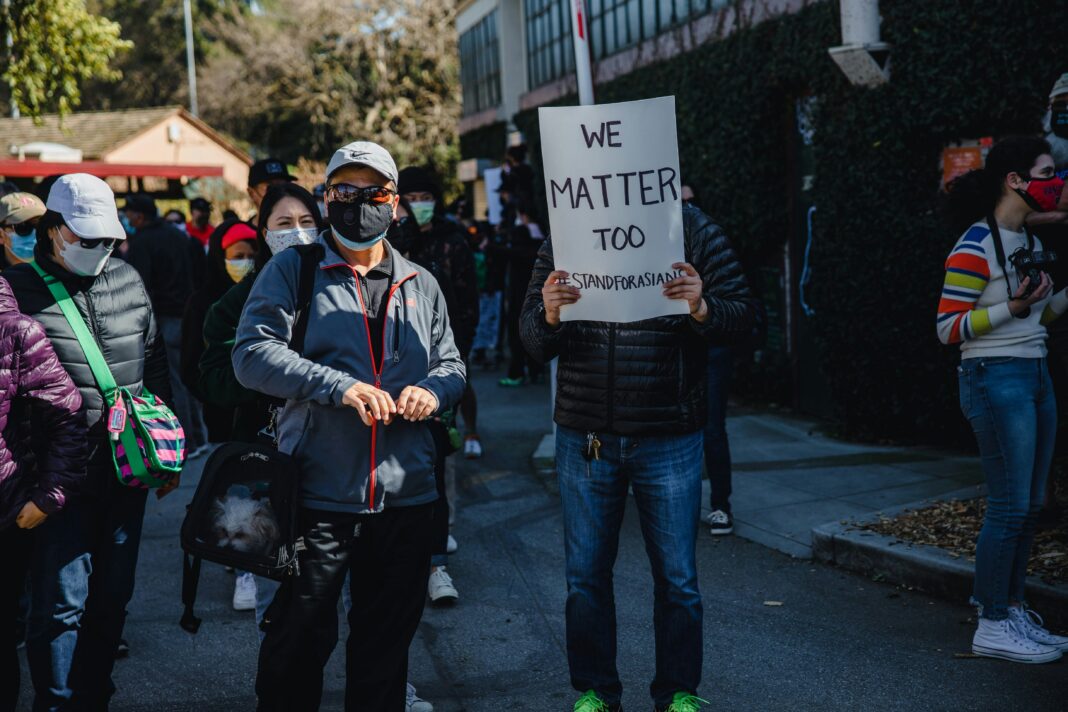
Amid the tension of the US-China relationship, and post the Covid-19 pandemic, Asian Americans are once again facing the ‘yellow peril’ myth.
The 5th annual Social Tracking of Asian Americans in the US Index — STAATUS — was released by The Asian American Foundation earlier this month. The survey polled 4,909 people over the age of 16 from across the US from Jan. 22 to Feb. 25.
One in 4 Americans surveyed believe that Chinese Americans are a threat to US society, particularly when it comes to national security. About 62% of Americans believe China is the greatest threat to the US, with 73% citing national security.
Other communities were also perceived as threats. 56% of those surveyed did not fully agree that Japanese American incarceration during World War II was wrong. “This raises concerns about willingness to oppose government infringement on Asian American civil liberties in the future,” wrote the researchers.
Prohibited from Buying Land
Four in 10 Americans support legislation that prohibits foreign citizens from buying land in the US. Currently, Florida, Montana, Virginia, and North Dakota have passed measures prohibiting Chinese nationals from buying land in the state. Georgia, Iowa, and Kansas are considering similar legislation. On May 9, the Texas House passed the strictest bill, barring citizens of China, Iran, North Korea and Russia from buying land or property in the state, and also leasing apartments. The measure is currently before the Texas Senate.
House Democratic Caucus Leader Gene Wu labeled the measure racist, and said it subjected all Asian Americans to increased hate crimes.
”Our community is under threat. Our loyalty to the US is always in question,” said Sruthi Chandrasekaran, director of data and research at TAAF, in an interview with American Community Media. “It only needs a spark to put our entire community under attack.”
Perpetual Foreigner
Asian Americans are plagued by perceptions of being the “perpetual foreigner,” said Chandrasekaran. Even several generations out, they continue to be perceived as more loyal to the home country than the US, she said.
Almost half of Asian Americans surveyed said they had been insulted or called a bad name over the past year. More than 1/3 had been harassed or threatened, and 15% were physically attacked or assaulted. Almost 2/3 of Asian Americans surveyed said they felt unsafe in at least one public space.
The report noted that 63% of Asian Americans believe they will be victims of discrimination over the next 5 years. One third of White Americans reported that they also expect to face discrimination.
‘Hard Workers’
Conversely, however, the model minority myth also still plagues Asian Americans. 20% of those surveyed believed Asian American students were the reason their children did not get into elite, Ivy League schools.
The majority of those surveyed labeled Asian Americans “hard workers,” “good at math,” and successful. But they also believed Asian Americans were socially awkward, less charismatic, foreigners, and carriers of disease.