


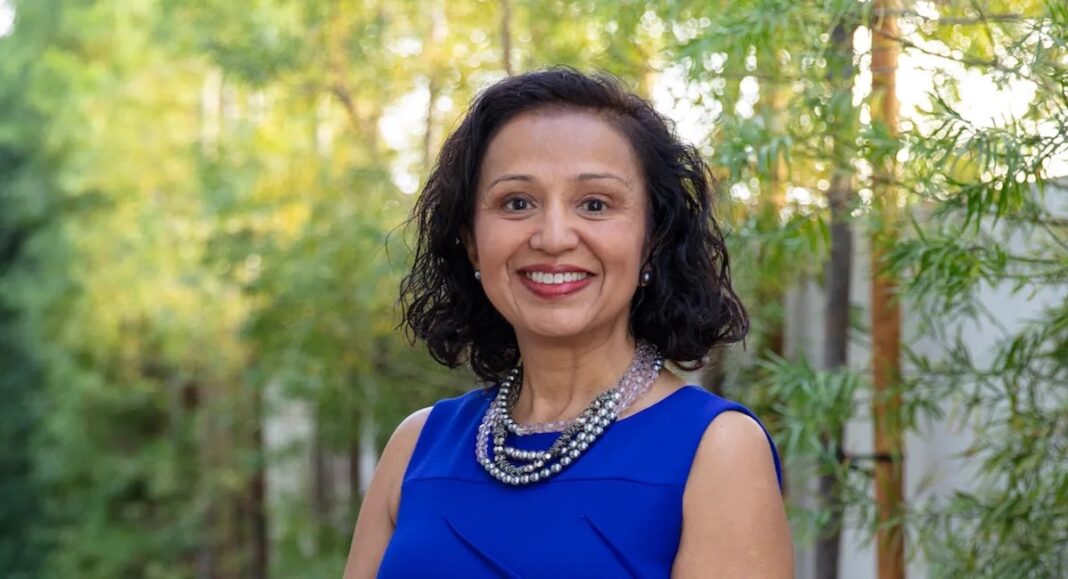
The James Irvine Foundation Leadership Awards, on Feb. 12, named Indian-American Manjusha Kulkarni, one of 9 honorees this year, for her trailblazing work to ensure the health and safety of Asian American and Pacific Islander, LGBTQ+, refugee, and immigrant populations.
As Executive Director of AAPI Equity Alliance, Kulkarni grew AAPI Equity Alliance from a behind-the-scenes organization to a coalition of over 40 organizations that serves the 1.6 million Asian American and Pacific Islanders in Los Angeles and beyond.
A co-founder of Stop AAPI Hate Kulkarni is a leading voice in the fight for the safety and protection of all AAPIs in America.
Acknowledging the impactful contributions of this year’s recipients to build a more vibrant, inclusive, and resilient California, Governor Gavin Newsom said, ”The California Way means finding new solutions to big problems, and that’s exactly what these leaders have demonstrated.”
In an exclusive interview with India Currents, Manjusha Kulkarni commented on her recent award, saying, “I think the award is a recognition of our communities, our struggles and challenges.”
She also chatted with India’s Currents Managing Editor Meera Kymal about her innovative work confronting hate and discrimination against AAPI communities with data, partnerships, and policy solutions.
This interview has been edited and condensed for clarity.
India Currents is a Cal State Library’s Stop the Hate initiative grantee. We asked Manjusha Kulkarni about the top challenges that immigrant and minority communities face today in trying to counter bias.
MK: The way that racism is often discussed in America, in a way to sort of de-legitimize the harm that people experience is to say that it’s simply prejudice, interpersonal bias, when in fact, what is happening, and what so many in our community are experiencing is institutional and structural racism. I think that makes it hard even to meet the challenges in daily life.
Our reporting shows that desi community groups lack knowledge or awareness, or maybe access to resources. What makes minority groups more vulnerable and how can we bridge the gap?
MK: I would say that while we often may see them as simple disparities, I think of them more as systemic inequities, how systems have been created that offer supremacy to one group at the cost of the other. You know, it is often because of immigrant status, individuals being low income, lacking assets, in this sort of Uber capitalistic nation that we live in, that they’re not able to have their needs met.
Read the full story at India Currents

This resource is supported in whole or in part by funding provided by the State of California, administered by the California State Library in partnership with the California Department of Social Services and the California Commission on Asian and Pacific Islander American Affairs as part of the Stop the Hate program. To report a hate incident or hate crime and get support, go to CA vs Hate.