

Emily Kim Jenkins | The San Diego Voice and Viewpoint
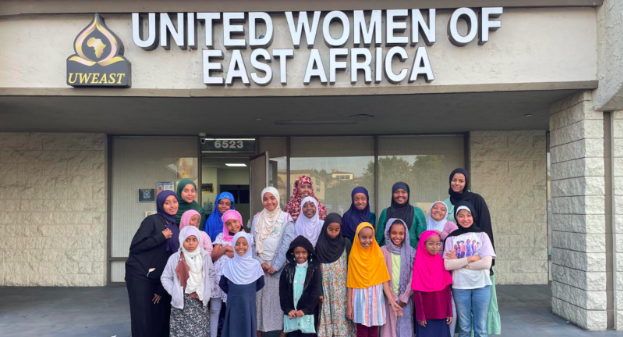
Sometime around 2009, shortly after it was founded, Faiza Warsame started visiting the United Women of East Africa in San Diego.
She was a young girl looking for community, who then became a teenage girl looking for an internship. Now, she works as the Community Engagement Specialist for the United Women of East Africa Support Team (UWEAST, pronounced you-weest), approaching her tenth year on the team.
“It feels like home,” Warsame said of UWEAST. “It’s a place for families, or for you to be a part of a family.”
UWEAST was formed in 2008 to provide, as its website describes, a “successful, linguistically appropriate, culturally competent and cost-effective physical and mental health intervention program.” Its incorporation was inspired by a lack of support tailored to East Africans in navigating healthcare. The organization has a focus on women and children of East African descent, but lately, the spotlight has been on a different demographic – the aging population facing Alzheimer’s and dementia.
“It hasn’t always been a focus for us, but as of recently, I have noticed a rise in memory loss within the community, especially the elders,” Meshate Mengistu, Program Manager for UWEAST said.
Research shows that Black American adults are roughly twice as likely than White American adults to be diagnosed with Alzheimer’s, but also less likely to receive an early diagnosis. When noticing a rise in age-related dementia and Alzheimer’s, UWEAST partnered with Take on Alzheimer’s to learn more and offer resources on a broader scale.
“The biggest issues that we have are lack of education and lack of resources. A lot of our community members don’t talk to the doctors or don’t express the symptoms at an early stage,” Warsame said at a Take on Alzheimer’s San Diego County event.
Warsame also noted that a social stigma around talking about memory loss or aging contributes to later diagnoses, since pursuing care for early symptoms isn’t common.
“The hope is that we’re able to have workshops and trainings for caretakers and community members that are interested and having doctors that have an East African background, or African background come out and just kind of talk about Alzheimer’s and dementia,” said Mengitsu, posing some questions the organization wants to answer. “What does that look like? What is the beginning of it? What makes a person? What kind of care does a person need when they’re going through that?”
Brain health, including Alzheimer’s prevention and care, is much like any other aspect of health – it isn’t accessible to everyone without cultural competency in the forefront. UWEAST has identified several tenets of cultural competency and offers resources to make it achievable for everyone.
“When it comes to people that identify as Black or African, a lot of the time, [healthcare professionals] definitely don’t take you seriously,” Mengistu said. She said this issue is especially pervasive for clients on MediCal or Medicaid.
Cultural competency also includes more spheres than just ethnicity – issues such as not being aware of a woman’s religious beliefs and interactions with other men can deter a person from even seeking health consults. Language barriers can also be a deterrent, and a lack of research means that specialized, preventative care can be hard to come by, Mengistu said.
“All Africans are lumped up in one … [demographic], which makes it really difficult to know exactly which specific people have certain deficiencies or adhere to certain things. So if, [hypothetically] a majority of our Ethiopian community has schizophrenia, right? You wouldn’t be able to know that, because they’re lumped up with somebody from Nigeria or Ghana, so they’re not getting the proper, adequate attention,” she said.
UWEAST sends interpreters and translators to go with patients free of charge, with over eleven languages offered, including Arabic. The organization offers support to everyone, but there are highlighted, concerted efforts to reach women. “They’re the pillar of the house. They’re the ones that are keeping the whole family together. They’re the ones who are supporting not only their husband, but also their children. Also the community, they’re the ones that are making the changes. So it’s very important that we’re giving them the right resources,” Warsame said.
Education is at the forefront of the work. “We just want to empower the community – or inspire, not even empower, but inspire our community and outer community to be self-sustaining, rather than always needing someone or something and fully understanding the resources available to them,” Mengistu said.