


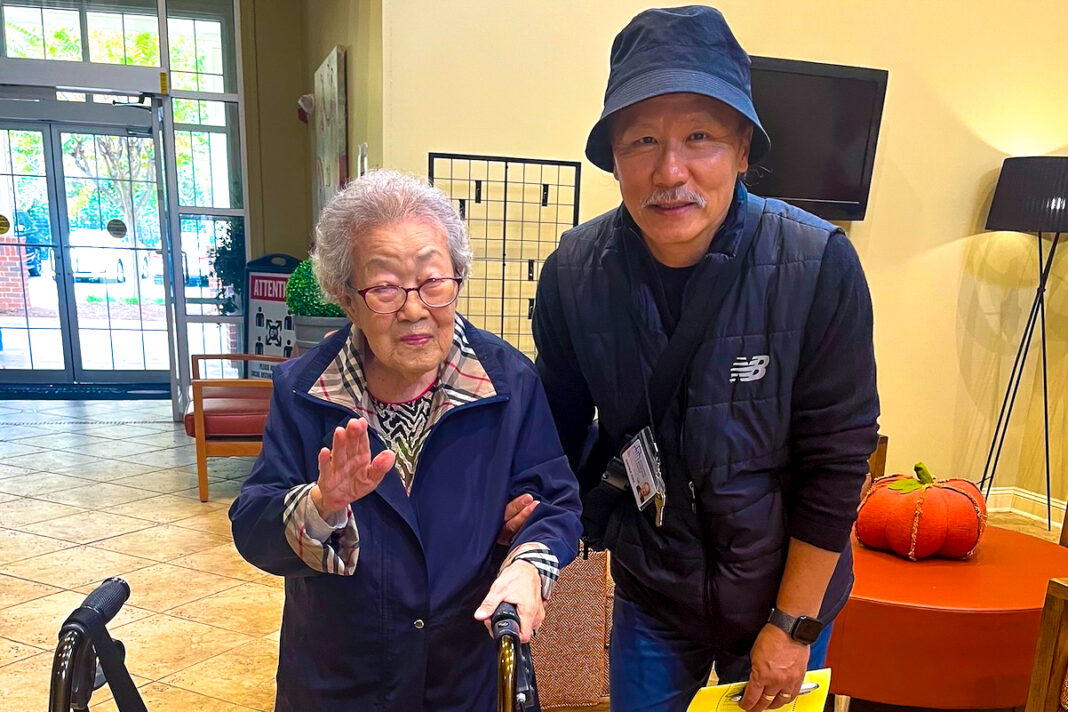

ATLANTA — Xavier Kim saw a striking scene while helping Korean American voters at George Pierce Park in Suwanee, Georgia, on Nov. 3: A 100-year-old Korean grandmother came to vote. This would be the last ballot she ever cast, she told him.
Another Korean senior arrived with a walker, still in pain from recent knee replacement surgery. When Kim asked why she came in that condition, she answered that she needed to vote.
Kim volunteered to help about 20 Korean seniors vote that Election Day.
“That means a lot to me because I know that many younger voters don’t even register to vote,” he said. “Those Korean seniors are committed to voting because I think they are doing their responsibilities as citizens, and they realize that voting itself is more important than who they need to vote for.”
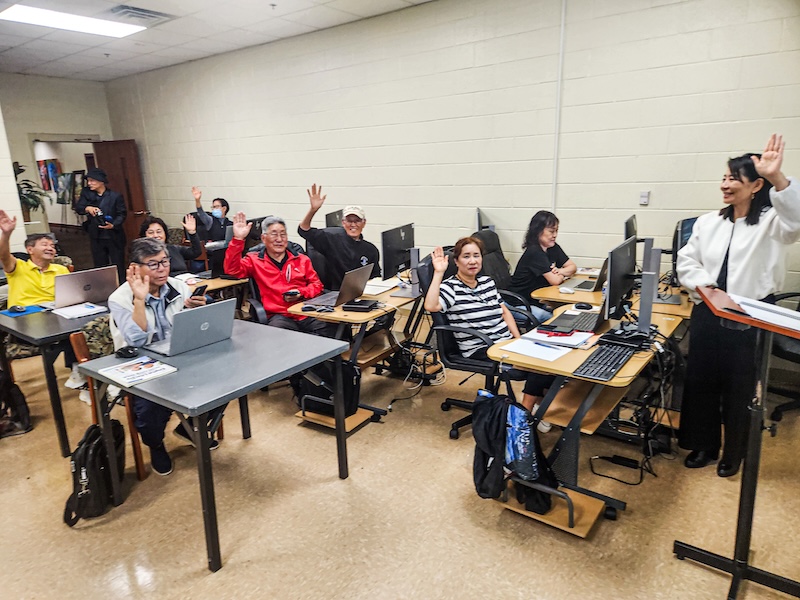
Korean American students in a digital literacy class in Suwanee, organized by the DAOL Lifelong Learning and Cultural Project, shared the same spirit. When instructor Christin Lee asked whether anyone had voted, most students raised their hands.
Sijun Park, one of the students, drove three Korean friends to the polls on Election Day. None had voted before or knew how the voting machines worked. Afterward, his friends were elated.
“I could not believe voting was that easy,” Park said they told him.
Their turnout was part of a statewide surge among Asian American and Pacific Islander voters that helped deliver historic results in Georgia.
AAPI voters in Georgia part of record turnout
More than 4.1 million Georgians voted, the most ever in a Georgia midterm.
Asian Americans Advancing Justice-Atlanta reported particularly historic turnout among AAPI and immigrant communities in the 2026 midterm election. Compared with 2022, early voting rose 63% among AAPI voters and 105% among Latino voters, according to an analysis of state data by Emory University political scientist Bernard Fraga.
“We knocked on 45,000 doors … across AAPI and immigrant neighborhoods,” and helped voters in 13 languages at 15 polling sites across metro Atlanta, said Kay Kang, outreach coordinator at Advancing Justice-Atlanta.
Victoria Huynh, founder of AAPI Hub, organized phone banks, shuttles and early voting events in Gwinnett County.
She recalled a time one decade ago “when few people considered Georgia a place where Asian American voters impacted elections … AAPI voters once felt tired, or felt their votes did not matter. However, more voters turned out because they cared about immigration, the economy and small business issues.”
Candidates make history statewide
Georgia voters reshaped their state’s leadership in the Nov. 3 election: Keisha Lance Bottoms won to become the nation’s first Black woman governor, and Black women won eight of the 10 statewide races on the ballot, including attorney general and secretary of state.
Asian American and Pacific Islander candidates also gained ground, winning at least 11 seats in the General Assembly, according to unofficial results.
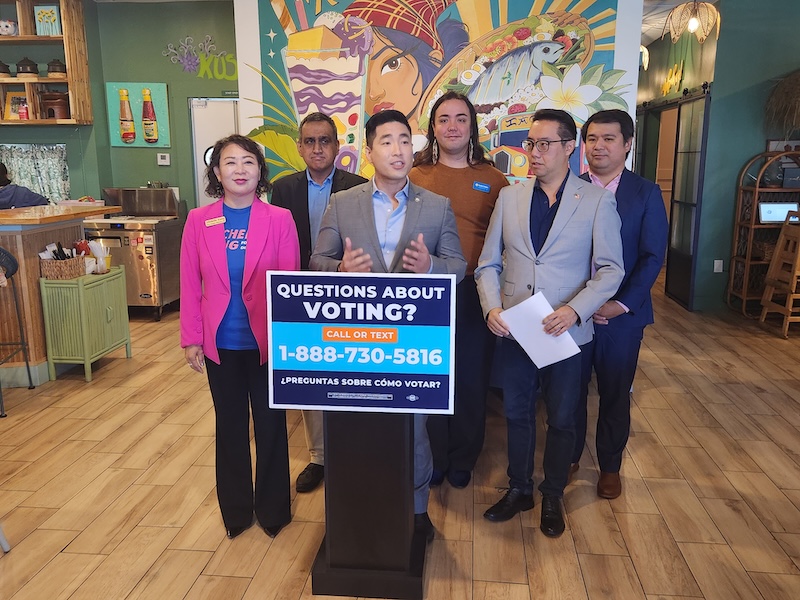
A decade ago, only two AAPI legislators served in the General Assembly, Huynh said.
Among the winners, Jyot Singh became the first Indian American and Sikh American elected to the Georgia General Assembly. Bentley Hudgins became the first Japanese American and the first openly transgender and nonbinary person elected to the body. Ruwa Romman won her race to become the first Palestinian American in the Georgia state Senate.
Korean American candidate Michelle Kang won her race for state representative, defeating Republican Rep. Matt Reeves 58.5% to 41.5% in unofficial returns, two years after falling 621 votes short.
Affordability drove her win, Kang said: “This year’s election, Asian American communities and all immigrant communities came together and gathered the vote as early as possible. Overall, the issue was the living cost, the very high cost of living.”
Out-of-state AAPI leaders also campaigned in metro Atlanta ahead of Election Day.
Sen. Andy Kim, D-N.J., visited Nam Dae Mun Farmers Market and a Korean noodle restaurant in Duluth two weeks before Election Day, where AAPI merchants described the impact on their businesses of inflation driven by tariffs and oil prices.
Sen. Tammy Duckworth, D-Ill., rallied local supporters in Duluth in early October.
“Georgia’s vote carries national weight, sending a message about the values of our democracy,” she said.
Kang credited the Democratic Party of Georgia’s coalition-building for her victory.
“Our party set up a Gwinnett County campaign office in Duluth, the heart of Koreatown,” she said, “so a coalition of Black, white, Latino and AAPI volunteers and voters worked together to win the election.”