


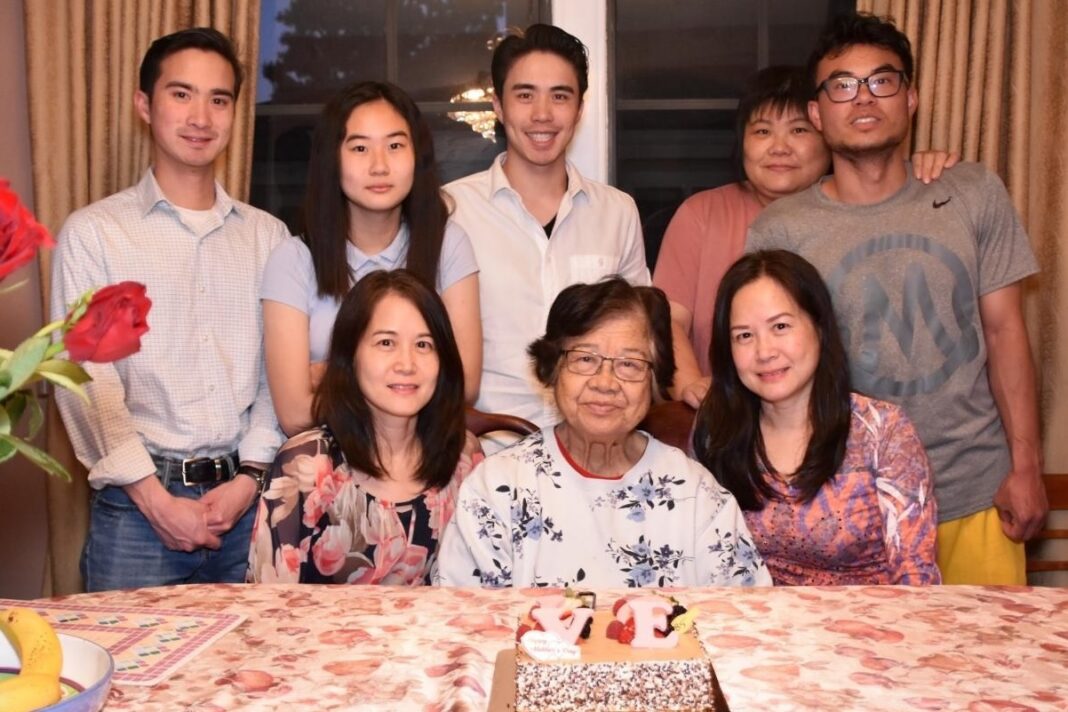

When my grandma started kidney dialysis several years ago, my mom and all her sisters came together to care for her. Together, they spent hundreds of hours accompanying my grandma to various appointments and regular hospital visits.
Of all the challenges, one of the biggest involved her diet.
Like many Chinese Americans, my grandma sees food as a large part of her identity. It is not simply a means of nourishing the body; it is an essential tie back to her culture.
At some point during my grandma’s treatments she required a complete overhaul of what she’d been accustomed to eating. I remember my mom holding a medical pamphlet of ingredients considered off limits for kidney dialysis patients. The list included soy sauce and oyster sauce, two of the most foundational ingredients in Chinese cooking.
Suddenly, we had to track levels of sodium, potassium, and fluid intake in all my grandma’s meals. Moreover, as in many Chinese homes where family-style cooking is the norm, this meant we were all implicated.
My family spent endless hours estimating the nutrition levels contained in each and every ingredient. My mom pretty much had to become a doctor herself.
Eventually, we did what any sensible person would; we turned to the internet.
We scoured websites, poured through social media channels all in an attempt to find workable recipes. The problem, we quickly found, was that the overwhelming majority were tailored to American diets. We felt lost.
So, undeterred, I began reaching out to families who had gone through what we were then experiencing. And what I learned is that we were not unique in our struggle.
Earlier this month, I took part in a National Kidney Foundation Kidney Walk where I met a Filipino woman who told me she’d changed her diet because she wanted to be sure to live long enough to one day see her son grow up and have children of his own.
Doris Lew, a member of the National Kidney Foundation who went through kidney failure and dialysis herself, told me the lists of recommended food she received had apple pie and coleslaw, but none of the Asian ingredients she knew, like gai lan or bok choy. She said for many patients, being told what you cannot eat can feel like losing your cultural identity and even your joy of eating.
As part of my research, I emailed doctors and dietitians, and the more I talked to them, the more I realized the problem goes beyond just cultural blinders. There is, I realized, this almost dogmatic obsession with measurements, with tracking every single ingredient down to the milligram.
Yes, for people like my grandma, understanding what goes into her food is key. But at what point are we simply stripping from her and others the simplest of pleasures in life. I was certain there had to be another option.
A renal dietitian I spoke with told me that instead of saying no to ice cream, the mentality should instead be a bit less ice cream and maybe adding on some yogurt and some berries. I took that to heart. If someone had told my family the same thing about soy sauce, like using a little less or a lower-sodium option instead of none at all, it would have made a world of difference.
Eating healthier should be a gradual shift, not simply a list of foods you cannot eat starting on day one. Here is what has helped my family, and what I’ve learned from the doctors and dietitians I talked to:
Start with the dishes you already love and do swaps. Instead of switching to food my grandma didn’t want to eat, my mom kept making traditional Chinese dishes like pork short ribs but used less soy sauce, steamed instead of fried, and added more vegetables. Dietitians told me this is how they work, too: they start from what you already eat and adjust it, instead of handing you a brand-new meal plan.
Plan for eating out. Not everyone can cook every day. One doctor told me about a patient who works at a fast-food restaurant and eats there daily, so instead of telling her to stop, he helped her find the better items on the menu.
Find people who cook like you. The National Kidney Foundation has added many new recipes to its website, and online cooking videos can help you learn new versions of your favorite dishes.
Let technology do the math. At UC Berkeley, I’m surrounded by people building with technology, and it made me wonder if a computer could do the calculations my mom did by hand for hours. I and several of my classmates have been building a tool that starts with the family instead of the list: the dishes they cook, the brand of soy sauce in their kitchen, the restaurants they go to, and what they liked or didn’t. From there, our tool suggests small swaps that still taste like home, and it’s designed to get to know the family over time. We are still testing it with dietitians, we still have a lot to learn, but the feedback so far has been overwhelmingly positive.
We are also gathering ingredient or recipe swaps from families into a free guide for Chinese, Mexican, Indian, and other home-cooked dishes. Families can get a copy, try the tool, or share their own story at kidneyhealth.vercel.app/join. Submissions can be made anonymously and only require an email address so that we can send the guide.
My family’s struggles taught me that everyone deserves a plan that fits their life and their food, both of which are intimately connected.
And while we’re still navigating my grandma’s health challenges, I’m also excited about the prospect that she will one day soon be able to enjoy her steamed fish and wonton soup again without worrying.
Megan Kong is a first-year student at UC Berkeley majoring in Economics. She is part of the Sutardja Center for Entrepreneurship & Technology (SCET), where she and a team of classmates are researching family struggles with changing diets due to diabetes, kidney disease, and high blood pressure.